


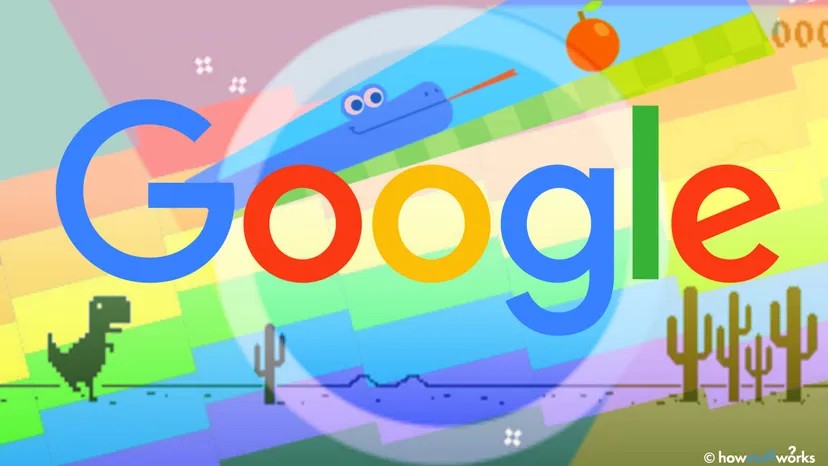
Google is more than just a search engine. It’s a cultural touchstone. You type, you click, you find. But behind the clean interface lies a playful side that most users never see. These are Google Easter eggs. They are hidden surprises tucked into the search code. Sometimes they flip your screen. Sometimes they reference pop culture. Occasionally, they just make you laugh.
What exactly is a Google Easter egg?
The term comes from the real-world tradition of hiding colored eggs before they’re found. In digital media, it means the same thing. It’s a secret feature. A reward for curiosity. If you dig deep enough into a product, you might find something unexpected.
It’s gratifying because you usually don’t know it’s there.
Many people have seen them without realizing it. The Google homepage often changes for specific holidays. You see a dancing bear or a scrolling globe. That is an Easter egg. But the real magic happens in the search bar.
Why do these hidden features exist?
The practice started in the 1970s. Warren Robinett, an Atari designer, hid his name in the game Adventure. His bosses refused to credit developers. He didn’t like it. So he coded a secret room to ensure his name appeared forever.
Since then, it became a staple of software. Video games love them. So does Google.
The romantic origin of Google’s secrets
Google has included these tricks since at least 2000. The first one was a Valentine’s Day experiment. Sergey Brin, co-founder of Google, asked Ken Perlin, a NYU professor, to add a special heart character to the search results.
The original site is archived now. But the heart remains. You can still trigger it. It requires specific mathematical code in the search bar. It’s a nod to the humble beginnings of a massive tech giant.
The Konami Code in search
Developers kept adding fun surprises. One of the most famous is the Konami code. It originated in the arcade game Contra. Enter the sequence (up, up, down, down, left, right, left, right) via voice search to unlock “Google cheat mode.”
The joke? You get “unlimited searches.” Google already gives you unlimited searches. It’s a cheeky reward for knowing the code.
13 Google Easter eggs to try right now
Ready to explore? These queries trigger animations or effects you won’t expect.
- Do a barrel roll. The entire results page spins. It’s a simple, effective animation.
- Askew. The page tilts slightly to one side. It matches the word’s meaning.
- Flip a coin. A virtual coin appears. Heads or tails.
- Recursion. A subtle joke for programmers. If you know the term, you get the reference.
- The answer to life, the universe and everything. Returns “42.” A nod to Douglas Adams’s Hitchhiker’s Guide to the Galaxy.
- Conway’s game of life. A simulation of cellular automata appears. Science nerds will appreciate this one.
- Anagram. The results rearrange themselves. It’s a visual pun.
- Solar eclipse. The page dims. A temporary sensory experience.
- Google logo history. Shows how the logo has changed over time. A trip down memory lane.
- Bletchley park. References the WWII code-breaking estate in England.
- Pi. Displays the pi symbol in the calculator widget.
- Once in a blue moon. Provides a precise mathematical calculation. Look above the dictionary definition for the answer.
- Blink html. A fun result for those familiar with web coding.
These features aren’t just distractions. They show the personality behind the code. They remind us that technology can be playful. Next time you search, try one. See what happens.
The ones that got away
Digital surprises have a shelf life. Google knows this. The company reserves the right to pull the plug on any search trick at any moment. It is part of the thrill. You hunt for a hidden feature. You find it. Then, one day, it vanishes.
Three notable examples have already faded into the archive.
Zerg rush
This was a classic. Type the command. The search page transforms. The logo breaks into small units. They swarm across the screen. You click them to survive. It was a real-time strategy game embedded in a browser window. It is gone now. The code has been stripped from the main interface.
The Monty Python nonsense phrase
Try typing this into Google Translate: “Wenn ist das Nunstück git und Slotermeyer? Ja! Beiherhund das Oder die Flipperwaldt gersput!”
It does not translate. It throws a FATAL ERROR warning. This was a nod to Monty Python and the Holy Grail. The phrase is nonsense in German, but it triggers a specific error code in the translation engine. Only the fans catch the reference. Most users just see a broken widget.
The birthday spinner
For a time, Google’s birthday doodles featured an interactive spinner. You could tweak the settings. You could change the colors. It was a playful nod to the company’s anniversary. That specific Easter egg is discontinued. You can still view archived versions of old doodles, but the interactive element is no longer live.
Hunting across the web
Google does not limit these surprises to the search bar. They are scattered across the entire product ecosystem. YouTube has hidden commands. Google Maps holds secrets in its street view interface. Google Translate is full of traps for the uninitiated.
The key is to look everywhere.
If you want to track what you have found, keep a list. Features disappear without warning. What works today might show a 404 error tomorrow.
When two eggs collide
Sometimes the system calculates more than one surprise at once. This creates unexpected results.
Try this query: “the number of horns on a unicorn plus the answer to life the universe and everything.”
A unicorn has one horn. The answer to life, the universe, and everything is 42. The sum is 43.
Google returns 43.
It is a small arithmetic joke. It shows how the engine processes multiple references simultaneously. You might think it is a bug. It is not. It is just another layer of the interface.
You can start your own search. The next surprise is already there. You just have to find the right query.


