


Privacy online has always been a slippery concept. Nowhere is it more distorted than in social media. By definition, these platforms thrive on the open exchange of ideas. They are where we share memes, embarrassing photos, cat videos, and yes, fake news. In this environment, “privacy” becomes unrecognizable.
We are only just now realizing the cost. After a research firm gathered and used data on millions of Facebook users without their knowledge, the illusion shattered. The data was potentially used for nefarious ends involving the 2016 presidential election. People are finally beginning to balk at the idea that social media is a safe place where we are in control.
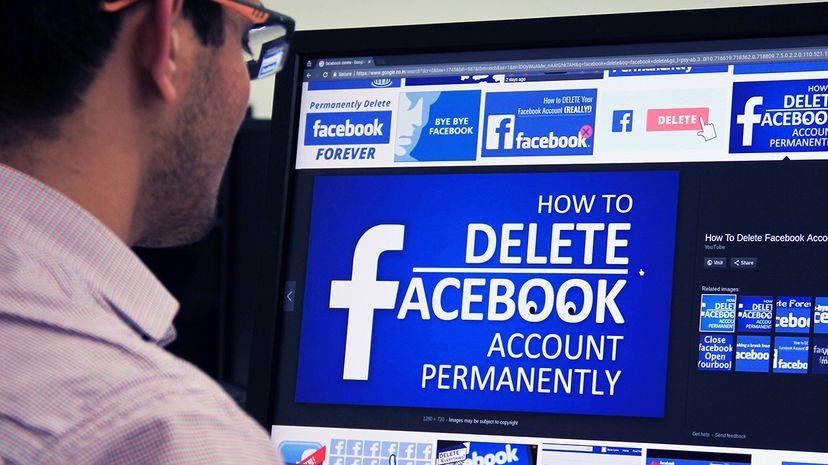
The fallout from the Cambridge Analytica scandal is immediate. Calls to #DeleteFacebook are flooding the internet. Facebook’s market worth has plunged by tens of billions of dollars. Founder Mark Zuckerberg has been forced to apologize publicly. Congress is preparing to question him on Capitol Hill. Even rivals like Elon Musk, who has historically jousted with Zuckerberg, spiked his Facebook accounts for Tesla and SpaceX.
A Legal Duty of Trust
This feels like the first large-scale reckoning of the information age. It is a 21st-century problem screaming for an immediate answer.
Woodrow Hartzog, a professor of law and computer science at Northeastern and an affiliate scholar at Stanford Law School’s Center for Internet and Society, has a specific suggestion. We need to carefully rethink and redo the fundamental agreement between users and platforms.
The new standard should be a binding legal agreement. It should mandate that platforms do not screw you.
When someone solicits our personal information, which is exactly what social media platforms do, then we trust them. They should be required to keep that trust.
Hartzog argues that trust cannot just be a vague feeling. It must be a legal requirement.
“They should be required to be discreet with our information. They should be required to be honest with us about what they’re doing with that info,” he says. This means more than burying details in the fine print. It means dispelling misperceptions. Platforms owe it to us to protect our data from hacks. They must follow up when they share info with third parties. If data is de-identified, it must stay that way.
Most importantly, companies must be loyal to us. They cannot elevate their own interests or those of third parties over ours. They asked for our information. They should act in our best interest.
This sounds noble. It is consumer-friendly. It is likely the right thing to do. But Facebook is a business. Trust is hard to monetize. Regulating it might be even harder.
“Trust isn’t a concept that is foreign to the law,” Hartzog insists. “We have regulatory regimes that exist like this. Your accountant owes you those sorts of duties of trust. Your doctor owes you those duties of trust.”
The mass collection of data is becoming a powder keg. Platforms should be required to give us that same duty of trust.
The Mechanics of the Leak
Facebook found itself in this quagmire after journalists discovered how the leak happened. Aleksandr Kogan, a Cambridge University researcher, developed an app for Facebook. It was a “personality quiz.”
The app shared information gathered from those who downloaded it. It also shared data for their friends who never downloaded it. This was against Facebook policy.
In all, Cambridge Analytica mined data on some 50 million Facebook users. Many had no idea it was happening.
The worst part, according to reports including one from the Guardian, is what they did with it. The data included seemingly esoteric minutiae. It tracked what users buy online. It logged which sites are looked at. It measured how long a cursor hovers over a link.
Cambridge Analytica used this to create psychological profiles on millions of Americans. They then targeted those users with political ads designed to influence their votes. Steve Bannon, the one-time chief strategist to President Donald Trump, was a board member of Cambridge Analytica at the time.
Information on millions of Facebook users was pilfered without their knowledge. It was used to try to get them to vote a certain way.
How could such an invasion of privacy happen?
The answer lies in all those boxes not checked when you download an app. It is in the 50th paragraph of every end-user agreement that goes unread but is agreed upon. It is in every mistaken assumption that these companies won’t screw you.
We are led by these companies to believe that we have control over what information we share.
Ha!
Why Your Privacy Settings Are a Lie
The feeling of control you get when tweaking your privacy settings is mostly an illusion. It is either a false sense of power or an overwhelming flood of choices that leaves you paralyzed. This is the core argument in Hartzog’s book, Privacy’s Blueprint: The Battle to Control the Design of New Technologies.
“The problem is that the control that people are given is an illusion… sometimes we’re given so much control we drown in it.”
Platforms like Facebook thrive on this deception. The reason is simple: your data is valuable. The Cambridge Analytica scandal didn’t just expose a loophole; it proved that these companies have every incentive to harvest as much information about you as possible.
Mark Zuckerberg responded to the backlash with a post that oddly mirrored Hartzog’s critique. He called it a breach of trust between Facebook and its users. He admitted that people share data expecting protection. He said we need to fix that.
But fixing it won’t happen through better settings menus. The ultimate solution lies in strict regulation. We need laws that control how these sites gather and distribute data. Without legal boundaries, users can never truly regain control.
Reclaiming Control Without Quitting
If the Cambridge Analytica scandal left you feeling exposed, you are not alone. Thousands of people are looking for ways to regain some agency over their digital footprint.
You can start by downloading the data Facebook has on you. Go to the general settings page and request your archive. It is a stark reminder of what is stored.
Next, visit the ad preferences page. Change your settings to limit how your information is used for targeting. The third-party apps setting page is another critical checkpoint. Revoke access to apps you no longer use.
Musk deep-dipped into this by deleting his account entirely. That is a valid move for some. But it isn’t the only one.
Hartzog suggests a different approach. It is about awareness. Be mindful of what you click. Think about the questions you answer.
Push back against the idea that using Facebook means you agree to forfeit your privacy. It doesn’t have to be that way. You can exist on the internet without handing over everything. Trust is hard to rebuild. But maybe, just maybe, we can start.


