



The internet is a dual-use technology. It builds bridges and burns them. Some entities use their digital reach with transparency, claiming territory openly. Others operate in the shadows. Then there is Anonymous.
This is not a formal organization with a headquarters or a CEO. It is an amorphous collective of computer-savvy individuals. They act as hacktivists.
A hacktivist combines “hacker” and “activist.” They use technical skills to protest censorship. They target perceived political, legal, or societal injustices. The goal is simple. Bring attention to a cause. Trigger action.
How Hacktivists Disrupt Services
Hacktivists often band together to exact revenge. Anonymous is the most famous example. Their methods are blunt.
They deface websites. They replace graphics and text with their own messages. Or they initiate DDoS (distributed denial of service) attacks.
A DDoS attack overwhelms computer systems. It makes sites and networks completely unavailable. No one can access them.
These tactics work. For years, Anonymous has garnered worldwide attention. Sometimes for serious causes. Sometimes just for fun.
The Sony PlayStation Network Attack
Consider the 2011 incident. Sony sued George Hotz. He created a workaround for the PlayStation 3. It allowed users to run the Linux operating system.
Sony had initially advertised Linux capability as a feature. Then they backtracked. They released a patch to disable it.
Anonymous found this outrageous. They sabotaged the PlayStation Network.
For nearly a month, no one could access the online multiplayer system. The company’s stock price took a major hit.
Was Anonymous in the wrong? Or were these hackers exacting justifiable revenge on a litigious company?
Public Perception and Legacy
Anonymous got what it wanted. Headlines.
News stories often condemn Anons as cyber-terrorists. Some call them evil vigilantes. Others label them anarchists.
Other publications brand them as saints. They fight back against corruption. They fight against injustice.
When enough members latch onto a crusade, awful and wonderful things happen.
The group trumpets its presence with a slogan.
“We are Anonymous. We are legion. We do not forgive. We do not forget. Expect us!”
Advent of Anonymous

How Anonymous evolved from 4chan trolling to global protests
Anonymous isn’t a company. It isn’t an NGO. It isn’t even a traditional hacker group with a roster of members and a CEO. Calling it a “group” implies structure. It has none.
Think of it as a mood. A digital hive mind. A chaotic culture.
To understand what Anonymous actually is, you have to look at where it started. Not in a bunker. Not in a corporate boardroom. But on 4chan.
Specifically, the /b/ board of 4chan. This is an image board. Users post images. Comments follow. There is no registration. There is no identity. Just text and pixels.
The culture of ‘lulz’
The atmosphere on 4chan is abrasive by design. It is not family-friendly. It is not safe. It is intentionally rough.
This roughness acts as a filter. It pushes away the casual browsers. It repels the polite. It leaves behind a specific type of user.
These users are driven by lulz.
Lulz is a derivative of LOL. But it carries more weight. It is laughter at the expense of others. It is often biting. Sometimes vengeful. Sometimes just absurd.
To get lulz, users might insult someone personally. Or they might coordinate a complex prank. The goal is never permanence. The point is to not take anything seriously. The prank is the end. The aftermath is irrelevant.
From jokes to IRC
This culture of pranks didn’t stay static. Over time, some users wanted more. They wanted impact. They wanted schemes that went beyond sophomoric jokes.
They moved from the image board to IRC (Internet relay chat).
IRC allows for real-time communication. It supports detailed planning. It allows for rapid coordination.
This shift marked the birth of Anonymous as a recognizable entity. It was slow. It was fractious. It was messy.
The structure of no structure
How does a movement without leaders function?
It doesn’t. Not in the traditional sense.
There is no hierarchy. There is no chain of command. Anyone can claim the name. Anyone can join. The only requirement is action.
You don’t join Anonymous by signing up. You join by doing something. Hacking a server. Protesting a policy. Leaking documents.
“Anyone on the planet can be Anonymous. To be truly considered part of the group, you must take real and definitive action.”
This lack of centralization is both its strength and its weakness. It makes it hard to stop. It also makes it hard to direct.
Splinter groups emerge constantly. Some focus on politics. Some on social justice. Others on pure chaos. They may share a cause. They may not.
But they all share the same DNA. No leaders. No membership cards. Just shared intent.
The first major test
This loose structure was put to the test early on. The world watched. Some cheered. Many jeered.
The event that cemented Anonymous in the public consciousness wasn’t a single hack. It was a coordinated response.
It began with Project Chanology.
This was not just a prank. It was a mobilization. It connected the online culture of 4chan with the physical world. It showed that a nameless collective could disrupt real-world institutions.
The protests against the Church of Scientology followed. People gathered in masks. They chanted. They were seen.
This was the moment Anonymous stopped being an inside joke. It became a phenomenon.

Organized actions from Anonymous became known as ops (short for operations). Some ops fizzle out before a single Web site is vandalized. Others result in online cataclysms that cause real-world financial and political upheaval to the dismay and delight of millions of people.
Anonymous achieved undeniable celebrity status in 2008. That year, a rather unflattering (and creepy) video of Tom Cruise rambling on about his Scientology beliefs was leaked to the Internet, to the anger of church leaders.
So the church attempted to do the impossible — it tried to remove the video from the Internet. In doing so, they raised the ire of Anonymous, which saw these attempts as a form of censorship. Anons also took issue with the church itself, which it views as a money-grubbing cult.
Thus, Project Chanology was born. Anonymous gathered its collective abilities with the intention of removing the church from the Internet. In a move that would become a hallmark of Anonymous missions, the group broadcast its intentions in a YouTube video.
Then the project began, first as DDoS attack that interfered with the church Web site. Next, there were prank phone calls and orders for unpaid pizza sent to church offices all over the world — anything to disrupt day-to-day functioning. Of course, these tactics weren’t exactly legal, and as a result, risked sealing Anonymous’ reputation as law breakers and vigilantes.
Then Anonymous had its moment of clarity, sparked by non-Anonymous Scientologist critic Mark Bunker, who pleaded with the group to use non-destructive and legal means to accomplish its ends.
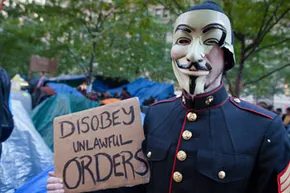
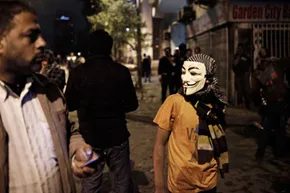
Thanks to his suggestions, Anonymous shifted from illegal tactics to more legitimate actions, sending thousands of protesters out in front of the churches, all wearing Guy Fawkes masks, the likes of which have become a visual hallmark of Anonymous. These are the same masks worn by the lead character in the movie “V for Vendetta,” in which an anonymous anti-hero takes on the powers that be.
During the Chanology ruckus, it became evermore clear that Anonymous was evolving beyond juvenile tricks. Anonymous was getting more serious, more focused and more powerful.
After nearly two years of intermittent pranks and hacking, Anons tired of Project Chanology and mostly ceased activities against the church. There were plenty of other targets out there, and Anonymous was just getting warmed up.
How Anonymous Shifted Tactics and Why It Mattered
The transition during Project Chanology wasn’t just about changing methods; it was about survival and impact. When Anonymous first engaged with the Church of Scientology, they relied on Distributed Denial of Service (DDoS) attacks to flood the church’s websites with traffic until they crashed. They also engaged in social engineering pranks, such as ordering thousands of dollars worth of pizza to church addresses or making disruptive phone calls.
This approach carried significant risk. By engaging in illegal activities, Anonymous risked cementing its public image as nothing more than digital vigilantes. It limited their ability to gain widespread sympathy or political traction. The turning point came when Mark Bunker, a critic of Scientology but not a member of Anonymous, intervened. He argued that destructive hacking was counterproductive. The group needed to operate within legal bounds to maintain moral high ground and maximize visibility.
The result was a strategic pivot. Instead of just crashing servers, Anonymous organized physical protests. They mobilized supporters to gather outside Scientology centers globally. These protesters wore the Guy Fawkes mask, popularized by the graphic novel and film V for Vendetta. This visual became iconic. It transformed Anonymous from a nameless online mob into a recognizable movement with a symbol.
The shift from illegal DDoS attacks to legal protests marked a maturation in how Anonymous operated, allowing the group to expand its influence beyond the digital realm.
The Symbolism of the Guy Fawkes Mask
The choice of the Guy Fawkes mask was deliberate. The image, derived from V for Vendetta, represents an anonymous hero fighting against tyranny and oppressive power structures. For Anonymous,

You might wonder how a nameless, faceless collective with zero formal allegiance can actually pull off large-scale digital strikes. The answer is simple. They do. What started as an abstract concept on imageboards has become a potent force for real-world consequences. No one is safe. Not massive governments. Not Fortune 500 corporations. Not even hate groups. They have all felt the sting of Anons coordinating their attacks.
For the oppressed, the voiceless, and anyone tired of waving signs in a system they view as rigged by the wealthy and powerful, Anonymous offers hope. It is a spark in the dark. But to their targets, the group looks like nothing more than a band of bored computer geeks with a destructive streak. Or worse. They are viewed as anarchist vigilantes. A sleeping digital dragon. And when that dragon wakes up, the damage is immense.
The Myth of Membership
Calling Anonymous a “group” is misleading. There are no membership cards. No initiation rituals. No diplomas proving you are “officially” Anonymous. You just show up. You participate. You get it.
But even without a hierarchy, there are strict social norms. A unique culture has emerged, documented largely in Encyclopedia Dramatica. Think of this site as a crash course in Anonymous culture. A warning, though: it is unfiltered. It contains graphic language and offensive content. It is not a place for the easily shocked.
While there is no single rulebook, the community adheres to a set of internet mores. Encyclopedia Dramatica lists them out. Rule No. 12 is blunt: “Anything can and will be used against you.” It is a reminder that privacy is a myth in this arena. Rule No. 33 is equally cynical: “Lurk more. It’s never enough.” Watch. Learn. Say nothing until the moment is right.
Other rules strip away any romanticized notion of heroism. Rule No. 6 states: “Anonymous can be a horrible, senseless, uncaring monster.” This is not always a crusade for justice. Sometimes, it is just chaos. Sometimes, it is cruelty.
More Anonymous Operations
The list of targets is endless. From Scientology to Westboro Baptist Church, from PayPal to Visa, the group has taken on titans. These aren’t just DDoS attacks. They are data dumps. They are doxxing campaigns. They are real-world disruptions.
The question isn’t whether Anonymous can hit you. It’s why they haven’t yet. Or why they might next.
When the collective grew restless with Scientology, it pivoted. The focus shifted to the Westboro Baptist Church. Anonymous defaced the hate group’s website and flooded its pages with messages of tolerance. It was a direct counter-narrative.
Links to Occupy Wall Street were also common. Anons urged protesters to stay peaceful during sit-ins and marches. But the group didn’t stop at political protest. They hunted child pornographers. The goal was to cripple associated websites and release the names of distributors. This wasn’t just trolling. It was targeted disruption.
Targeting Government and Tech Giants
Anonymous frequently strikes government and commercial institutions. A notable example involved the shutdowns of The Pirate Bay and Megaupload. These sites distributed movies, music, and software. The backlash wasn’t about losing free downloads. It was about hypocrisy. Authorities used illegal DDoS attacks to take them down. Hackers use the same tactics. But the government officials behind the shutdowns faced no criminal charges. Citizens did. The irony fueled outrage.
In retaliation, Anons hacked numerous sites. Targets included the International Federation of the Phonographic Industry. They also hit the Motion Picture Association of America. The U.S. Department of Justice and the Federal Bureau of Investigation were not spared.
Global Insurgency and Civil Rights
The Arab Spring triggered immediate involvement. When protests sparked in Tunisia, Anons coordinated communications. They vandalized government websites to stoke revolutionary fires. The pattern repeated in Egypt and Syria.
In 2012, Anonymous launched attacks against Israeli government sites. They cited mistreatment of Palestinians as the motive. Passwords and private databases were leaked. Two years later, when Indian authorities suppressed political protesters in Kashmir, the group disabled Indian military and police sites.
Steubenville, Ohio, presented a different kind of case. In August 2012, a 16-year-old girl was allegedly sexually assaulted. Evidence suggested local authorities protected the perpetrators. Knight Sec, an offshoot group, intervened. They leaked photos of the assault. They released a video of a man bragging about the incident. They publicized the names of those involved. This included two star players on the local high school football team.
The reach is wide. The operations are impactful. But how does a faceless entity function without a central command?
Inside the Collective
Anonymous uses a logo of a person in a suit with a question mark for a face. How do nameless people coordinate sophisticated hacks and real-world rallies? There are no official websites. No designated social media feeds. No leaders.
Various factions maintain their own presence. Twitter feeds and sites like AnonNews post press releases and operational updates. Public discussion forums exist. You can watch chats unfold. Sensitive information rarely appears there.
To join, you must prove yourself. Hang around long enough. Display useful skills. Show knowledge. Eventually, you might receive an invitation to private groups. Then, perhaps, you can participate in a campaign.
Identity is a core tenet. Anons reveal no personal data. Smart operators don’t use their own computers. They use public terminals. They employ software to hide their location.
“Anonymous almost always announces its intentions before launching ops.”
The organization isn’t for everyone. DDoS attacks and hacking can lead to criminal charges. The group acknowledges this risk. For the risk-averse, there are other ways to contribute. Research. Video production. Writing press releases. Offering insights on execution.
Despite these precautions, the group is public about its goals. They announce intentions before acting. This demonstrates accountability. It also prevents others from scapegoating Anonymous for crimes they didn’t commit.
Precautions aren’t foolproof. Members sometimes slip. They don’t always like the headlines they make.
Anonymous Destiny

Vetting wasn’t enough.
Anons try to filter out the weak links and the trolls. They use invite-only channels. They check credentials. But the system leaks. It always leaks.
Infiltration is a constant risk. Authorities slip in. Rivals do too. When they do, the result is rarely “anti-lulz.” It’s usually jail.
The LulzSec precedent
Look at 2012. It was a bloodbath for the movement.
Ryan Cleary and Jake Davis got caught. They were part of LulzSec, a splinter group that operated with less discipline and more chaos. They admitted to hitting the Pentagon. The U.S. Air Force. Nintendo. Sony. The Arizona State Police.
Dozens of other arrests happened that same year. Worldwide.
The charges were predictable. Defacement. DDoS attacks. Doxxing. Leaking private data to the public sphere.
Prosecutors built solid cases. Not just theories. Solid cases.
The government hits back
By early 2013, the tone shifted.
Eric Holder, the U.S. Attorney General, didn’t mince words. He called these groups a “steadily increasing threat to America’s economy and national security interests.”
That wasn’t rhetoric. It was a policy directive.
The Justice Department decided to prioritize hacking crimes. They stopped treating it as a nuisance. They started treating it as a national security breach. Prosecution became active. Aggressive.
Why they fight back
The Anon community pushed back hard.
Their argument was simple. They don’t want money. They don’t want classified secrets for personal gain.
They want exposure.
They claim to shine a light on corruption. On germ-ridden corners of society. On institutions that hide behind bureaucracy.
Whether that’s true or just a cover for ego? That’s debatable.
But the movement didn’t die. It adapted.
Every exploit adds credibility. Every arrest adds martyrdom. Legitimacy is a weird currency for a faceless group. But it works.
Anons are a cultural force now. They make things happen.
When the government fails. When journalists ignore the story. Anonymous steps in.
It’s not for everyone. If you’re on the receiving end of an op, your digital life changes forever. Permanently.
The crackdown didn’t stop them. It just made them sharper.
Frequently Answered Questions
What does Anonymous mean in tech?
In computer culture, Anonymous refers to a loose collective of hacktivists. They operate without a central leader. They share goals but not identities.
Who is an Anonymous person?
It’s not a specific individual. It’s a participant in the movement. Someone who adopts the mask and the mission.
Why was 2012 so significant for arrests?
It marked the peak of government counter-operations. Key figures like those from LulzSec were convicted, setting a legal precedent for prosecuting hacktivism as a national security threat.


