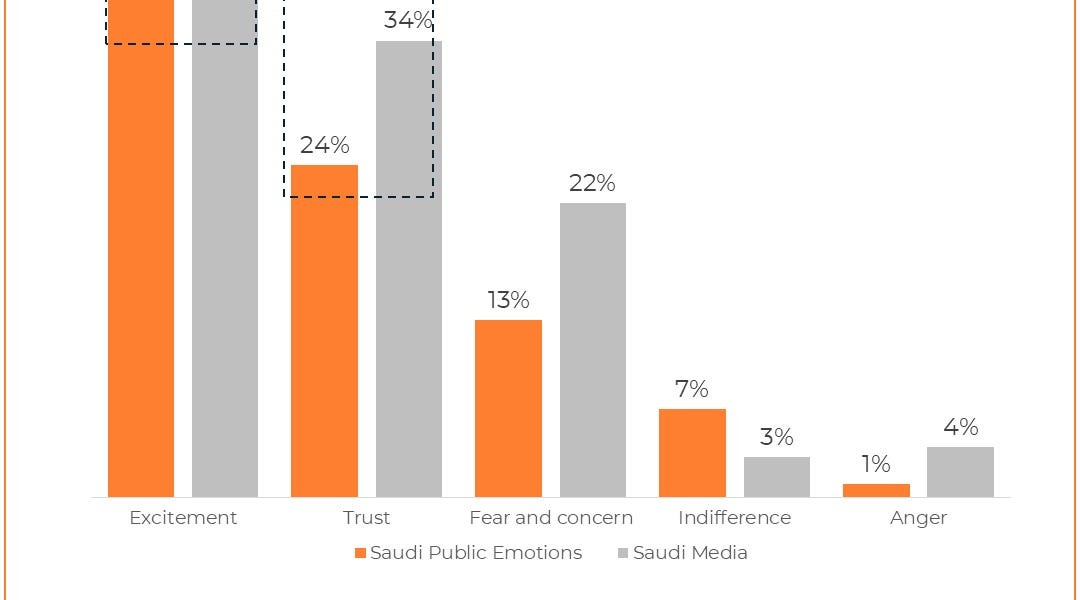
While enthusiasm for artificial intelligence continues to surge among tech leaders and governments, a growing undercurrent of public concern is emerging across the Middle East. This divergence highlights a critical challenge for the region: how to harness the economic potential of AI while addressing societal anxieties about its impact.
The Disconnect Between Policy and Public Sentiment
Recent trends indicate that while corporate and governmental bodies are aggressively investing in AI infrastructure, public trust is not keeping pace. This gap matters because sustainable AI adoption requires more than just hardware; it demands social license. If the benefits of AI—such as efficiency and innovation—are perceived as outweighing the risks only by elites, the technology may face resistance or regulatory backlash in the future.
Key Insight: The current narrative is shifting from “AI as an inevitable good” to “AI as a complex societal tool,” requiring more transparent governance.
Saudi Arabia’s Strategic Push as a Data Hub
In a move to solidify its position in the global tech landscape, Saudi Arabia is accelerating its efforts to become a major data hub. This strategy is part of the broader Vision 2030 initiative, aiming to diversify the economy away from oil by becoming a digital leader.
- Infrastructure Growth: Significant investments are being made in data centers to support the massive computational demands of AI.
- Global Competitiveness: By positioning itself as a central node for data storage and processing, the Kingdom aims to attract international tech firms and reduce data latency for regional users.
This development raises important questions about data sovereignty and security. As the Middle East becomes a critical node in global data networks, ensuring robust cybersecurity frameworks will be paramount.
Digitizing the Pilgrimage: A Case Study in AI Implementation
On the practical side, the Saudi Data and Artificial Intelligence Authority (SDAIA) is leveraging technology to enhance the pilgrim experience. Recent initiatives include digitizing the pilgrim journey through Istanbul, a key transit point for millions of Hajj and Umrah visitors.
- Streamlined Logistics: Digital tools are being used to manage crowd flow, provide real-time information, and improve safety measures.
- User Experience: The goal is to reduce friction for travelers, making a spiritually significant journey more accessible and less stressful.
This application of AI demonstrates the technology’s potential to solve complex logistical challenges. However, it also underscores the need for careful implementation to ensure that digital solutions do not alienate traditional practices or exclude those less comfortable with technology.
The Hardware Reality: The Post-Training Era
Behind these public-facing initiatives lies a critical technological shift: the move toward the “post-training era” of AI. As noted by hardware providers like Positron AI, the focus is shifting from training massive models to efficiently running them (inference).
- Cost and Power Efficiency: The challenge now is to scale datacenter inference with lower power consumption and cost per token.
- Infrastructure Demand: This shift places a heavier burden on hardware infrastructure, making efficient chips and data center design crucial for the sustainability of AI growth.
For the Middle East, this means that building a robust AI ecosystem is not just about software development but also about securing the physical hardware that powers it.
Conclusion
The Middle East stands at a pivotal moment in its AI journey. While governments and corporations are driving rapid infrastructure development and digital transformation, they must simultaneously address growing public concerns. Balancing technological ambition with social acceptance will be key to ensuring that AI serves as a tool for inclusive growth rather than a source of division.