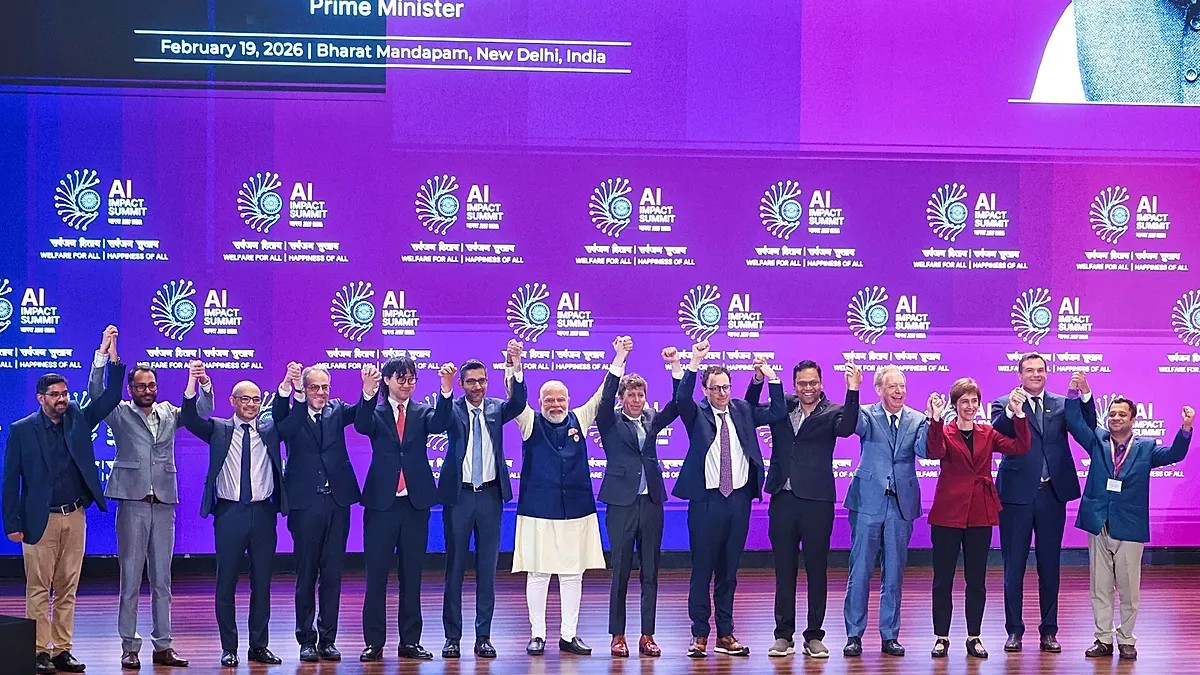
World leaders and tech executives have gathered in New Delhi for the annual Global AI Summit, an event intended to forge a unified approach to artificial intelligence (AI) governance. However, deep divisions remain on how to balance innovation with safety, with nations and companies staking out contrasting positions on regulation, control, and the very future of the technology.
US Rejects Global Oversight
The United States government has firmly rejected calls for international AI governance. Michael Kratsios, a White House technology advisor, stated unequivocally that the U.S. “totally rejects” centralized control, arguing that bureaucracy would stifle innovation. This stance echoes previous warnings from Vice President JD Vance against “excessive regulation” that could cripple the sector. The US position is clear: AI must be allowed to develop without constraints.
Europe Champions ‘Safe AI’
France’s President Emmanuel Macron struck a different tone, vowing to protect citizens from “digital abuse,” citing examples such as the misuse of AI chatbots to generate harmful deepfakes. Macron defended Europe’s approach, which prioritizes safeguards, and dismissed claims that it hinders innovation. He emphasized a vision of “sovereign AI,” developed and governed in a way that balances growth with ethical considerations. The underlying tension here is simple: the US sees regulation as an impediment, while Europe views it as a necessity.
India’s Inclusive Vision
India’s Prime Minister Narendra Modi presented AI as “a shared resource for the benefit of all humanity.” Drawing on the country’s philosophical heritage, he urged the development of AI that aligns with human values and promotes global inclusion. Modi’s message is that AI’s potential must be harnessed for the collective good, not just for strategic competition among nations.
Tech Leaders Weigh In
The summit also drew responses from key figures in the AI industry. OpenAI’s Sam Altman urged “urgent” regulation, warning that centralizing AI power in one company or country could lead to disaster. Google CEO Sundar Pichai emphasized the need to prevent the “AI divide” from exacerbating existing inequalities, while Anthropic’s Dario Amodei warned of a future where AI agents could surpass human capabilities within years.
Notable Absences and Concerns
Microsoft co-founder Bill Gates pulled out of a scheduled keynote address at the last minute, citing “careful consideration” of summit priorities. The timing followed recent revelations about his ties to convicted sex offender Jeffrey Epstein, raising questions about potential reputational concerns. The withdrawal highlights the scrutiny now facing even the most prominent figures in the tech world.
In conclusion: The Global AI Summit laid bare the deep disagreements over the governance of this transformative technology. While some advocate for unfettered innovation, others prioritize safety and ethical considerations. The path forward remains uncertain, but one thing is clear: the debate over AI’s future will continue to shape global policy and technological development for years to come.