Google is betting big on creativity again. This year’s I/O developer conference didn’t just bring tweaks. It brought overhauls. The company is doubling down on Flow, the AI creative studio launched last year, and Flow Music, its sibling platform for sound generation. The goal? To make creating stuff feel less like fighting software and more like having a partner.
Last year, Google pitched Flow as a “for creatives, by creatves” hub. It promised to cut out the need for half a dozen different apps. Instead of bouncing between tools for video, animation, and editing, you’d stay in one place. Now, they’re making good on that promise with features that actually let the AI hold your hand through the process.
Flow gets a brain (and a memory)
Elias Roman, Google’s senior director of product management, said creators hate fragmented workflows. He called it the end of the “flow state.” Switching between expensive single-purpose apps breaks your focus. Flow is trying to fix that with three big pushes: better control, cross-media compatibility, and fewer silos.
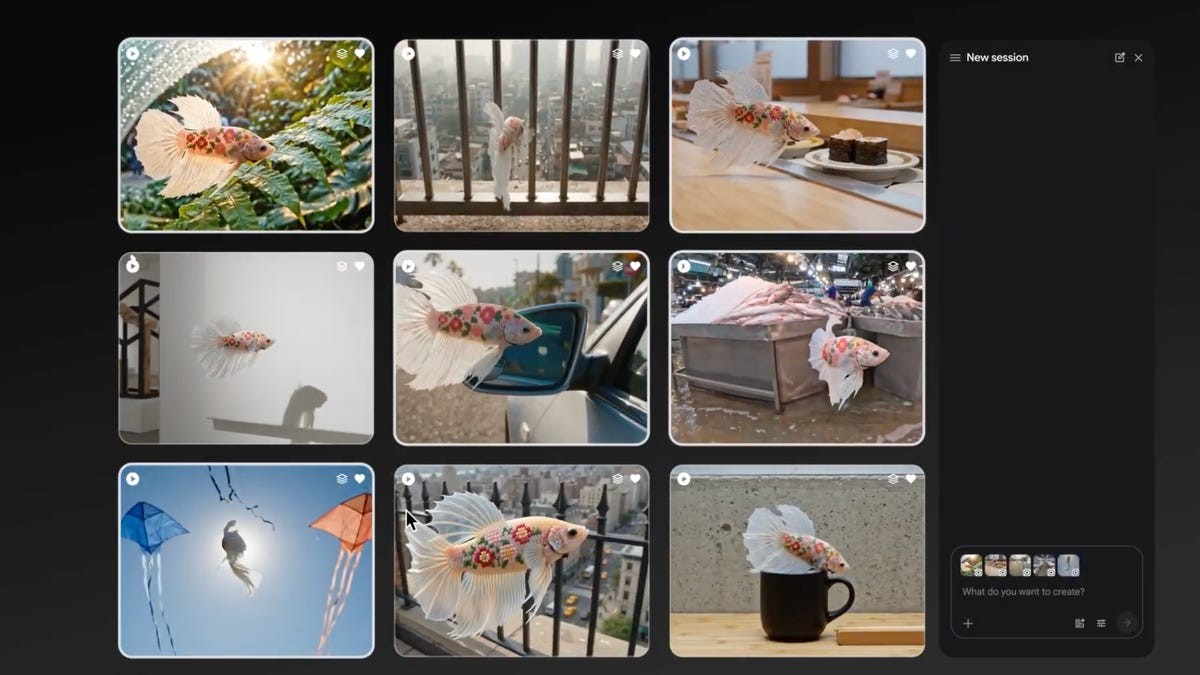
First up? Flow stops being just a prompt-box. It’s becoming a conversational agent. Powered by Gemini, it remembers your project history. It acts like a sounding board. Stuck on dialogue? The AI can brainstorm plot points with you. It’s less about generating one-off clips and more about long-form collaboration.
Then there are Flow Tools. You can code custom workflows using plain English. No JavaScript required. Want a specific video resizer or a weird shader effect? Just describe it. Build it. Share it. The feature turns users into mini-developers without the developer headache.
The real shift isn’t the speed. It’s the agency. You tell the tool what you want, not how to compute it.
The engine powering this is Gemini Omni Flash. Google’s jokingly called it “Nano Banana,” which is probably not their best PR choice. But it’s serious tech. It brings precise video-to-video editing to the table. More importantly, it handles character consistency. If your avatar has a scar in scene one, it has that scar in scene two. The model is live for global Google AI subscribers now.
Roman gave a demo that felt less like a sales pitch and more like magic trickery. He built a 1980s Times Square scene from scratch. He enforced strict constraints—like embedding a miniature pinscher in every shot as an Easter egg. He edited side-by-side videos with text commands. He rendered ASCII art characters on the fly. The system didn’t blink.
Oh, and they built mobile apps. Finally. Flow is in beta on Android (iOS is coming). Flow Music is live on iOS (Android is pending). Creators can now brainstorm while standing in line at coffee.
Music gets precise treatment
Flow Music got some love too. Usually, AI music generators are blunt instruments. You prompt “happy jazz” and pray for the best. Google wants to give you a scalpel instead.
You can now edit parts of a song individually. Want to change the lyrics but keep the beat? Easy. Want to translate the vocals into another language without altering the melody? Doable. You’re not regenerating the whole track from scratch every time. That saves time and keeps the vibe consistent.
Then there’s the cover feature. It lets you take an existing track—keeping the melody and structure—and swap the genre. Turn a pop anthem into lo-fi beats. The structure stays, the flavor changes.
Finally, Omni Flash comes to music videos. You don’t just get an audio track. You can conversationally direct a visual companion to go with it. Tell the AI you want neon lights, a rainy alley, or a synthwave sunset. It builds the scenes to match your song’s mood. Available now to subscribers.
So what now? We have AI that remembers us, talks to us, and edits alongside us. It feels powerful. Also, maybe a little unnerving?