It started with controllers. That was a few years ago. Then it hit keyboards.
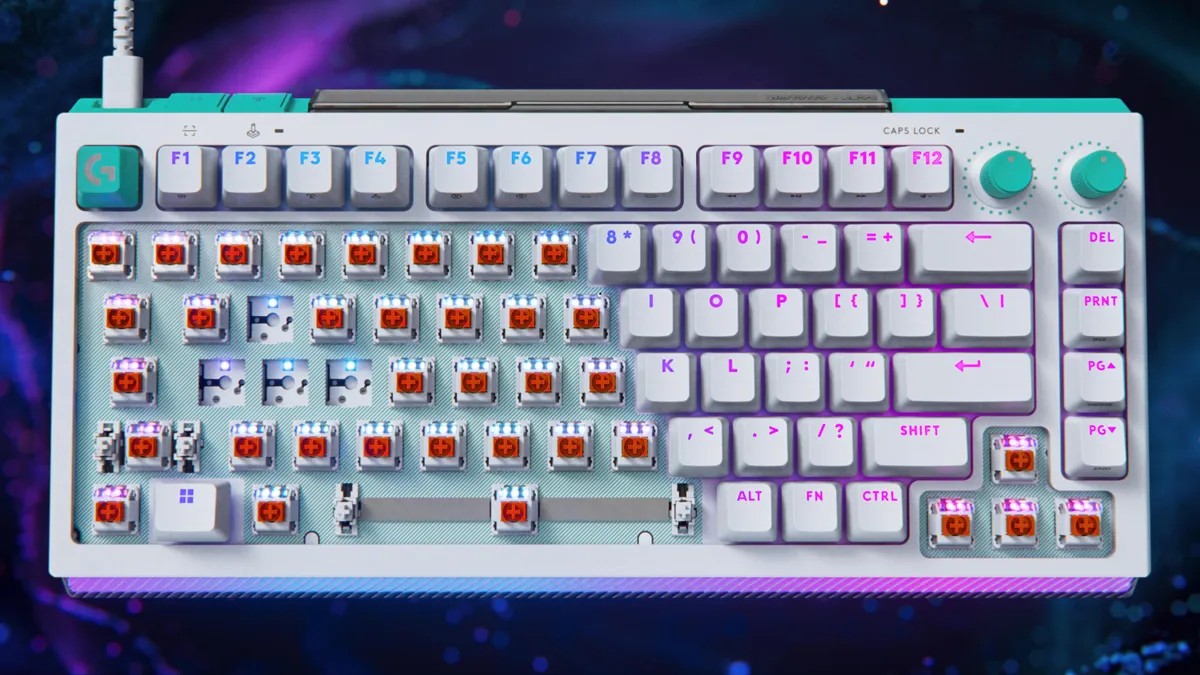
The trend is clear now. Hall Effect (HE) and Tunneling Magnetoresistance (TMR) technology isn’t coming. It is here. Dozens of options.
The question used to be when this tech would arrive. Now the question is simpler: is it actually worth the money?
There are benefits. There are also downsides. The answer?
Yes. But only if you know what you are signing up for.
What changes when you switch?
No more springs rubbing together.
That is the basic idea. Traditional switches rely on physical friction to close a circuit. Magnetic ones use sensors to detect movement.
Less friction means longer life.
Most mechanical switches boast a lifespan of 50 to 100 million keystroke cycles. That is roughly 10 to 15 yards of heavy use.
HE and TMR switches go beyond that. 100+ million is standard. 15 to 2 years. Likely the board itself breaks before the switches do.
Granular Control
Here is where it gets weird for casual users.
Magnetic switches can detect input at just 0.05 mm.
Standard mechanical? 1 to 2 mm.
Your brain fires faster than your finger moves that distance. That difference is small on a spreadsheet. In a ranked FPS match? It decides the gunfight.
Customization is even deeper.
You aren’t locked to one actuation point per key. Most HE/TMR keys let you set four actions per single press.
Two on the down. Two on the up.
Crouch. Then prone. Prime grenade. Throw grenade. One tap.
Or hop in a car. Turn on lights. Start the engine. All in one motion.
“You can perform four separate actions with a pressing of a key.”
Shoppers, MMOs, RPGs like World of Warcraft or League of Legends. Even Elden Ring. The potential is there. You don’t need it. But it changes how you play.
Speed
Rapid fire becomes real fire.
You don’t have to press the whole way down.
It takes muscle memory. At first? You miss inputs. Later? Going back to a standard mechanical keyboard feels sluggish. Heavy.
Think of it like playing piano.
Great pianists don’t mash the keys. They bounce. Light. Fast.
Magnetic keyboards let you do the same.
0.05mm vs 2mm isn’t about comfort. It is about reaction. Start your shot a fraction sooner. You win the trade. You survive.
N-key roll-over improves too.
Traditional switches need a key to release before another registers fully in complex combos. Magnetic sensors see everything instantly. Strafe. Peek. Shoot. No overlap issues.
The Cost
Everything newer costs more.
Not always. You can grab a Redragon for $30. Sure. But the good ones? TMR models in particular? They carry a premium.
Materials matter too. Concrete boards exist. They are heavy. They are expensive.
If you are curious. Don’t buy the flagship. Grab a cheap entry-level board. Feel it out. See if the tactile difference actually matters to you.
Typing
I’ve been testing these for two years.
Almost every magnetic keyboard felt wrong to type on.
Clack-less. Mushy. Or just… off.
Enthusiasts argue. Change the springs. Swap the plates.
Maybe. But out of the box? Most are meh for writers.
Almost.
Not Keychron Q3 HE 8 K.
This one is different. Custom Lime Magnetic Switches. Hot-swappable. Metal body. Gasket mount. PBT keycaps.
It just works.
It is the best board I have typed on. Period.
Gaming performance is top tier. Typing is satisfying.
You can find perfection. It just might be a specific model.
Battery Life
The tech hungry.
Sensors scan constantly. 8 000 Hz polling rates? Yes. That drains juice fast.
Many boards. Like that Q3. Come wired only.
Wireless options? 100 to 200 hours.
Compare that to 1 000+ hours on a mechanical board.
Big difference. Plan for charging cables. Or go wired.
Should You Buy?
Yes. But…
If you care about millimeters? Upgrade.
If you play competitive shooters? Upgrade.
If you want durability? Upgrade.
For everyone else? The old way works fine. Plenty of great non-magnetic boards out there.
The technology has matured. It is ready.
The choice isn’t about necessity anymore. It is about whether you want the edge.