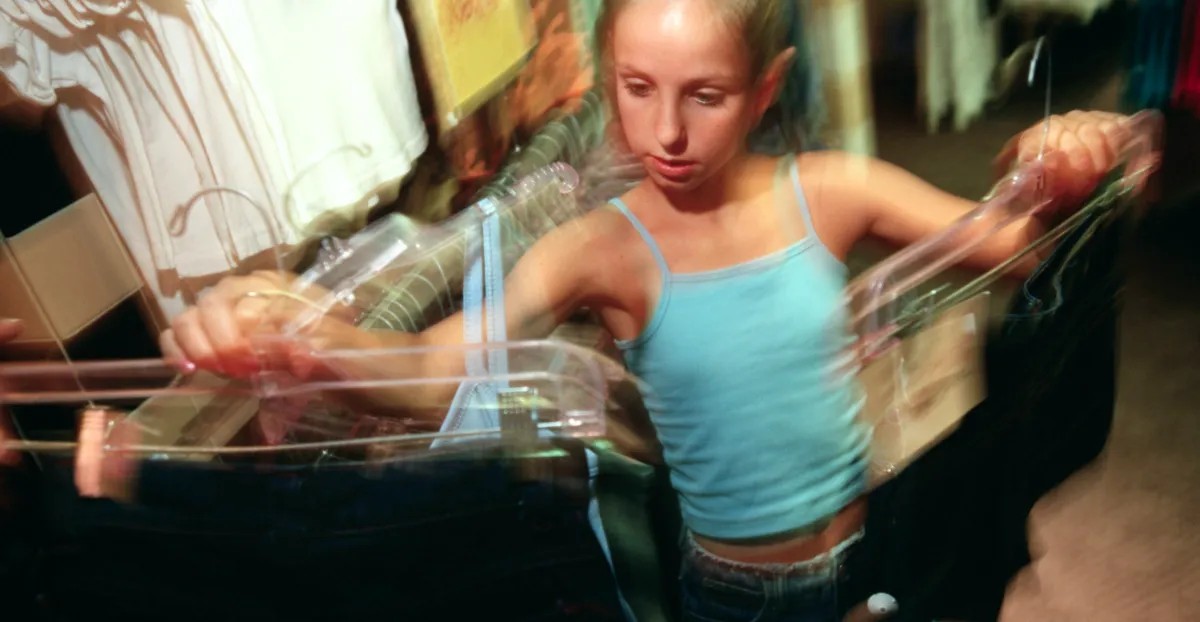
The early 2000s were a unique period for American teenagers, a final generation that experienced the height of mall culture before the rise of digital retail and entertainment. This cohort believed themselves to be worldly, often exposed to mature themes at a young age, yet their tastes and identities were profoundly shaped by a single, dominant force: Les Wexner.
Wexner, as CEO of L Brands, controlled a retail empire including The Limited, Bath & Body Works, Express, Victoria’s Secret, and Abercrombie & Fitch. These brands didn’t simply sell clothes; they defined what it meant to be “cool” for an entire generation, and Wexner profited immensely from this influence. The aesthetic of the era – low-rise jeans, flat-ironed hair, vanilla-scented perfume – was a direct result of his vision.
The connection between Wexner and convicted sex offender Jeffrey Epstein raises serious questions about the culture he fostered. For years, Epstein was Wexner’s sole publicly acknowledged client, and the two maintained an unusually close relationship. Though never charged, Wexner was listed in a 2019 FBI memo as a potential co-conspirator, with evidence suggesting he knowingly allowed Epstein to exploit aspiring models linked to Victoria’s Secret. Instead of reporting a $100 million theft by Epstein, Wexner settled privately.
The Epstein files reveal a private letter from Epstein to Wexner, stating they shared “gang stuff” for over 15 years and he would never disclose their confidential relationship. This suggests a deeper, more troubling connection than previously known. Beyond Epstein, other figures within Wexner’s orbit have faced accusations of misconduct. Ed Razek, former chief marketing officer at L Brands, was accused of sexual harassment of Victoria’s Secret models, while Mike Jeffries, ex-CEO of Abercrombie & Fitch, faces sex trafficking charges linked to young male models.
Wexner’s influence is often overlooked because he is not a household name like other figures in the Epstein scandal. However, his companies were central to the 2000s aesthetic and ethos. For many millennials, Victoria’s Secret was where they bought their first bra, and Abercrombie & Fitch defined their ideal of coolness.
L Brands did not simply sell clothes; they sold an ideology. Their brands enforced narrow standards of beauty, favoring thinness and whiteness. Abercrombie infamously refused to hire people of color and sold racist apparel, while Victoria’s Secret sexualized its models in ways that would be unacceptable today. The culture Wexner cultivated was compulsively raunchy, mirroring the growing normalization of pornography in the era.
The late 1990s and early 2000s were marked by a pervasive sexualization of youth culture, and L Brands stores played a central role. From Abercrombie’s explicit marketing to Victoria’s Secret’s provocative Fashion Show, Wexner’s brands pushed boundaries. A former Victoria’s Secret CEO admitted Wexner exploited opportunities to profit from this trend.
The question remains: was this a deliberate strategy to groom an entire generation, a consequence of unchecked capitalism, or something else entirely? Millennials are now grappling with the misogyny and racism normalized during their formative years. The raunch-purity paradox of the 2000s felt compulsory, with few alternatives to the binary of hyper-sexualization or enforced innocence.
Ultimately, the people who shaped millennial teen culture may have done so intentionally, exploiting a generation for profit while fostering a toxic and damaging environment.