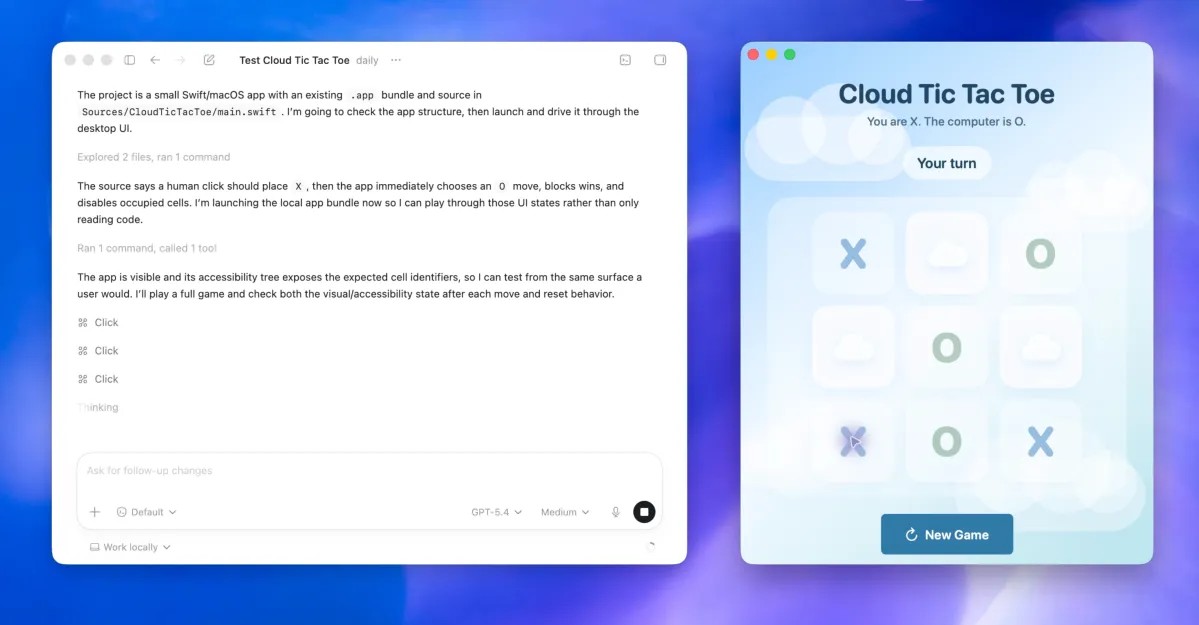
OpenAI has announced a major expansion of its Codex development system, transforming it from a coding assistant into a more autonomous “agentic” tool. The update introduces features that allow the system to control desktop applications, remember user preferences, and execute long-term tasks independently.
This move signals an aggressive strategic shift by OpenAI to reclaim momentum in the AI-driven software development market, following the recent success of Anthropic’s Claude Code.
Expanding the Scope of Automation
The most significant update is Codex’s new ability to interact directly with desktop applications. Unlike traditional tools that rely solely on APIs (Application Programming Interfaces), Codex can now operate within the user interface of various software.
Key capabilities of this update include:
– Background Operation: Codex can perform tasks in the background without interrupting the user’s active work in other applications.
– Parallel Processing: Multiple AI agents can now work simultaneously on different parts of a project.
– Non-API Integration: Developers can use Codex to test frontend changes or interact with software that lacks a formal developer interface, bridging a significant gap in automated testing.
New Tools for Integrated Workflows
To move beyond simple code generation, OpenAI is integrating Codex into the broader digital ecosystem through several new features:
- Visual Iteration: Utilizing the new
gpt-image-1.5model, Codex can now generate and refine images, allowing for more cohesive UI/UX development. - Ecosystem Integration: New plugins for GitLab, Atlassian Rovo, and Microsoft Suite will allow the agent to work within established professional workflows.
- Native Web Browsing: An in-app browser allows users to leave direct comments on web pages, providing the agent with precise, visual instructions for web-based tasks.
- Autonomous Scheduling: Codex can now schedule future work and “wake up” automatically to continue long-term, complex projects without constant human oversight.
The Power of Memory and Personalization
A critical addition to the update is a new memory feature. This opt-in capability allows Codex to retain context from previous interactions, such as specific coding styles, personal preferences, and corrections made during past sessions.
By learning from these experiences, the agent reduces the need for users to provide repetitive, detailed custom instructions, theoretically increasing both the speed and the quality of the output.
Rollout Details and Availability
The deployment of these features will be staggered across different regions and platforms:
- Platform: Initial rollout is limited to the macOS desktop app for users signed in via ChatGPT.
- Geography: Users in the European Union will receive the update “soon,” though no specific date was provided.
- User Tiers: Personalization and memory features are slated for Enterprise and Education users in the near future.
This update represents a transition from AI as a “chatbot” to AI as a “teammate”—a tool that doesn’t just answer questions, but actively manages workflows and learns from its environment.
Summary
OpenAI is evolving Codex into a highly autonomous agent capable of navigating desktop environments and remembering user context. This expansion is a direct response to the rising competition from Anthropic, aiming to establish Codex as a central, self-sustaining hub for professional software development.