The tech industry’s long-standing mantra of “move fast and break things” has hit a financial and operational wall. In the era of complex hybrid clouds and microservices, “breaking things” is no longer a badge of agility—it is a massive, recurring cost known as the “chaos tax.”
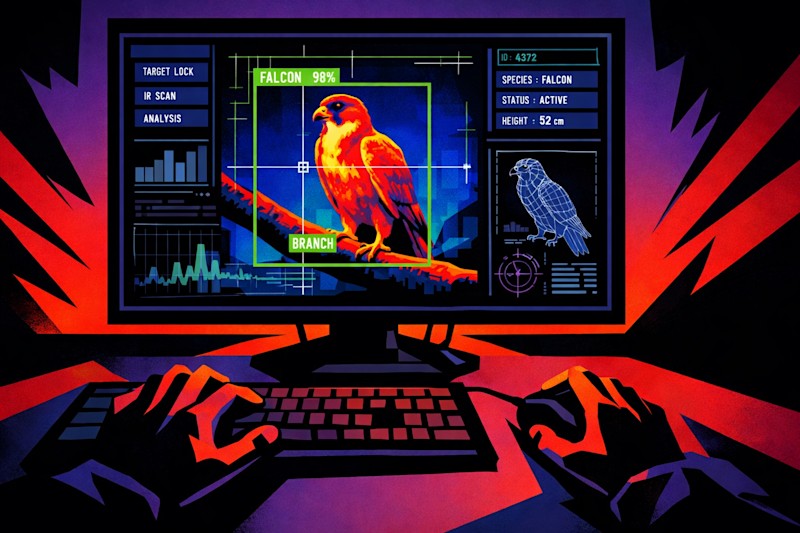
To combat this, two-year-old startup NeuBird AI has announced a $19.3 million funding round and the launch of Falcon, an autonomous production operations agent designed to move IT teams from a reactive state to a predictive one.
The “AI Divide”: A Disconnect in the Server Room
The launch arrives alongside NeuBird AI’s 2026 State of Production Reliability and AI Adoption Report, which highlights a startling gap between corporate perception and technical reality.
The report reveals a significant “AI Divide” :
– 74% of C-suite executives believe AI is actively managing their company’s incidents.
– Only 39% of engineers —the people actually responding to outages at 2:00 AM—agree.
This gap matters because current incident management is failing the frontline. Engineering teams spend roughly 40% of their time managing incidents rather than building new products. This “toil” leads to alert fatigue; currently, 83% of organizations report that teams occasionally ignore or dismiss alerts, and 44% have suffered outages directly linked to suppressed notifications.
Meet Falcon: The “Minority Report” for Infrastructure
While previous tools focused on Incident Response (fixing things after they break), NeuBird AI is pivoting toward Incident Avoidance .
The new Falcon engine is a significant upgrade over its predecessor, Hawkeye. According to CEO Gou Rao, Falcon is three times faster and maintains a 92% confidence score. Its most critical capability is its predictive power:
– Predictive Accuracy: Falcon can forecast potential failures with high accuracy within a 24-to-72-hour window.
– Advanced Context Mapping: Instead of static dashboards, Falcon provides a real-time view of infrastructure dependencies, allowing engineers to see the “blast radius” of a potential issue before it spreads.
– Developer-First Workflow: Through “NeuBird AI Desktop,” engineers can interact with the agent via a command-line interface (CLI), integrating it into their existing coding workflows alongside tools like Claude or Cursor.
Solving the Security and Complexity Puzzle
Deploying AI in enterprise environments carries heavy risks regarding data privacy and “runaway” automation. NeuBird AI addresses these through two specific strategies:
- Context Engineering: To prevent sensitive data from leaking into Large Language Models (LLMs), NeuBird AI acts as a “gateway.” The LLM serves as the reasoning engine, but it never touches the raw data directly. This also makes the platform model-agnostic, allowing companies to swap out the underlying AI (e.g., from OpenAI to Anthropic) without rebuilding their entire system.
- Operational Guardrails: The agent operates within a restricted language that prevents it from executing anomalous or unknown commands, ensuring it cannot cause more harm than it fixes.
Furthermore, NeuBird AI claims its agentic approach could disrupt the expensive observability market. By reasoning across raw data, the agent can identify critical signals and ignore “junk” data, potentially reducing the need for massive, costly storage platforms like Datadog or Dynatrace.
Capturing “Tribal Knowledge” with FalconClaw
One of the greatest risks in IT is the loss of “tribal knowledge” —the specialized expertise held by senior engineers that isn’t documented.
NeuBird AI is tackling this with FalconClaw, a skills hub that allows teams to convert best practices and resolution steps into “validated and compliant skills.” This turns individual expertise into a reusable digital asset that the AI can deploy automatically across the organization.
The Bottom Line
With $64 million in total funding led by Xora Innovation, NeuBird AI is betting that the future of DevOps isn’t about hiring more people to watch dashboards, but about deploying intelligent agents that “see around corners.”
By shifting the focus from fixing broken systems to preventing them from breaking in the first place, NeuBird AI aims to turn the “chaos tax” into a measurable competitive advantage.