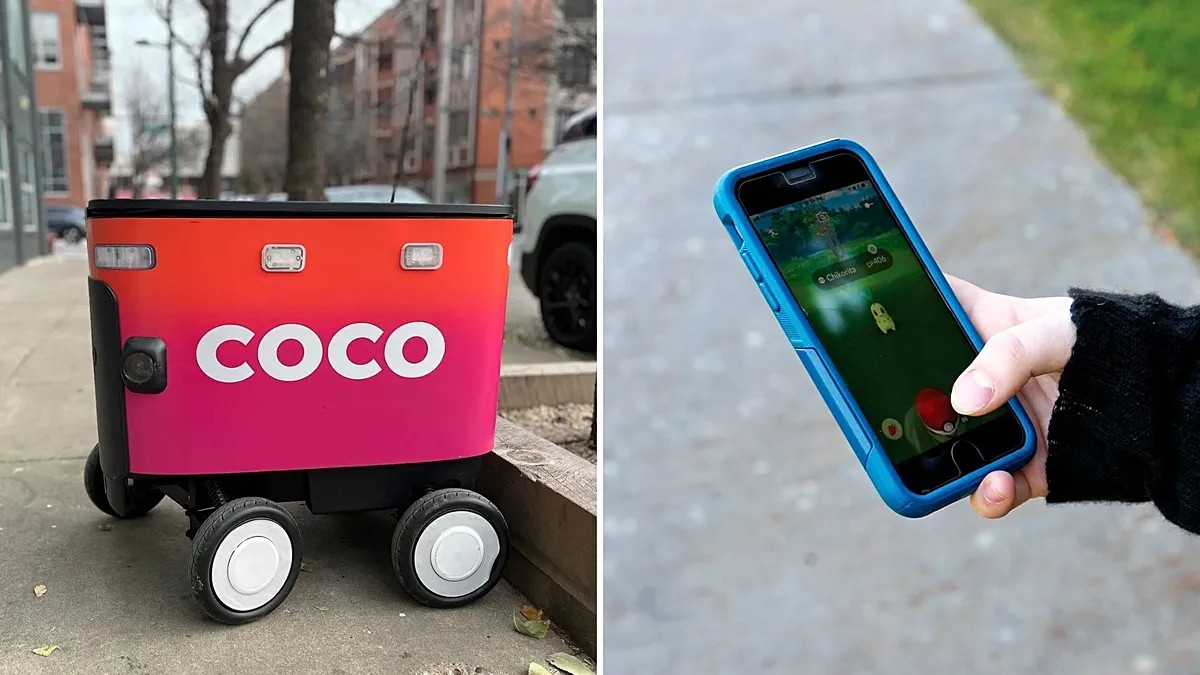
Players of the hit augmented reality game Pokémon Go have inadvertently contributed to a major advancement in delivery robotics. The game’s vast database of real-world images—over 30 billion captured by users exploring streets and landmarks—is now being leveraged to train robots for more accurate navigation.
The Power of Visual Positioning
Niantic Spatial, the division of Pokémon Go developer Niantic, has transformed this player-generated data into a highly precise Visual Positioning System (VPS). Unlike traditional GPS, which relies on satellite signals, VPS uses visual cues from the environment to determine location. This is particularly valuable in indoor spaces or dense urban areas where GPS signals can be unreliable.
The system essentially allows robots to “see” where they are, just as players see Pokémon through their phone cameras. This is not simply a coincidence. Niantic Spatial CEO John Hanke points out that the engineering challenges are identical: “Getting Pikachu to realistically run around and getting Coco’s robot to safely and accurately move through the world is actually the same problem.”
Real-World Impact: Coco Robotics
Niantic Spatial has partnered with Coco Robotics, a company operating a fleet of roughly 1,000 delivery robots in cities including Los Angeles, Chicago, and Helsinki. These robots—capable of carrying groceries and takeout orders—have already completed around half a million deliveries. Integrating VPS with GPS will improve the robots’ ability to navigate complex urban environments, making last-mile delivery more efficient.
How It Works: Voluntary Data Collection
The accuracy of the VPS has been steadily improving thanks to features like Pokémon Go ‘s “Field Research,” which incentivizes players to scan landmarks and public spaces in exchange for in-game rewards. Niantic emphasizes that participation in these scanning features is entirely optional and that the company has been transparent about data collection since 2019.
The success of this partnership demonstrates how gaming data can have unexpected real-world applications, blurring the lines between virtual entertainment and practical robotics. This integration is likely to accelerate the development of more reliable and versatile delivery systems in the future.