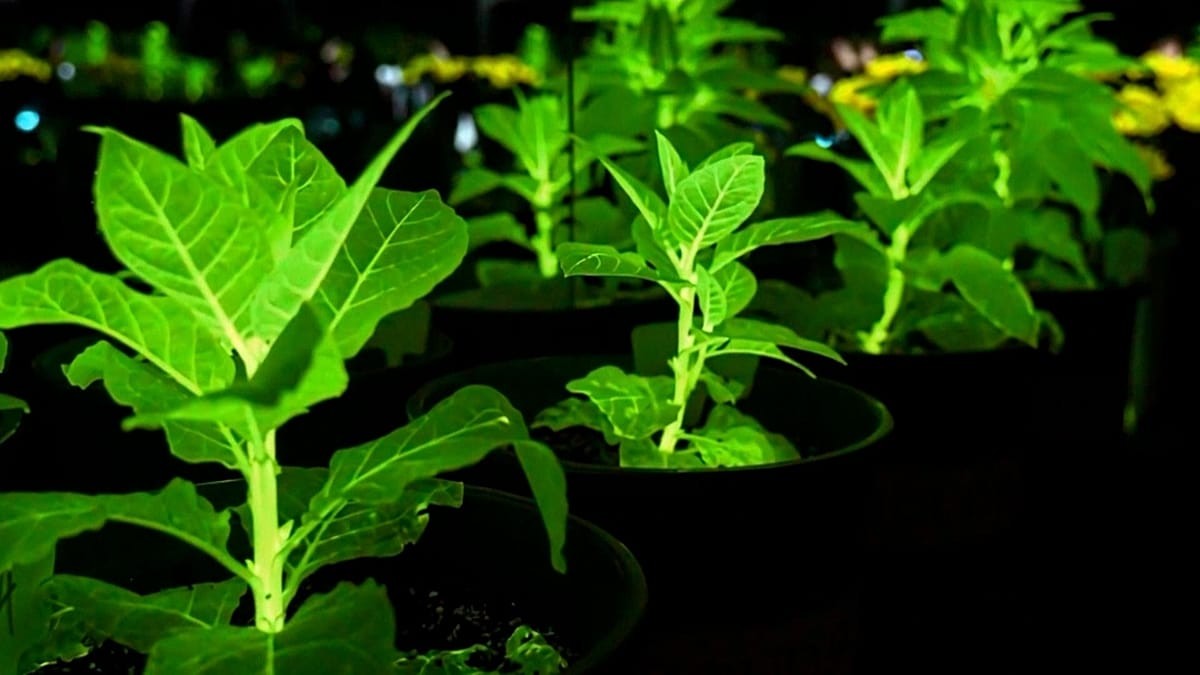
Chinese scientists have engineered plants to glow naturally in the dark, a development poised to revolutionize urban illumination and sustainable design. The breakthrough leverages gene-editing technology to transfer light-producing genes from fireflies and luminous fungi into plant cells, resulting in over 20 species – including orchids, sunflowers, and chrysanthemums – that emit visible light without external power.
The Science Behind the Glow
The project, led by Dr. Li Renhan of Magicpen Bio, stems from a personal fascination with bioluminescence. Dr. Li, recalling his childhood in rural China, sought to recreate the natural glow of fireflies in plant life. His team successfully transferred the necessary genes, enabling plants to produce light using only water and nutrients – a process that bypasses the need for electricity entirely.
“Imagine a valley filled with glowing plants in the dark… it would be like bringing the ‘Avatar’ world to Earth.” – Dr. Li Renhan
Beyond Aesthetics: Practical Applications
The implications of this technology extend far beyond novelty. Bioluminescent plants could drastically reduce energy consumption in urban environments by providing sustainable lighting for parks, walkways, and public spaces. This approach offers a low-carbon alternative to traditional streetlights, relying solely on natural biological processes rather than electricity grids.
The research also highlights the broader potential of gene editing in agriculture and medicine. Scientists are using similar techniques to develop pest-resistant crops, bolstering global food security, and accelerating drug discovery by enhancing disease observation at the cellular level.
A New Era for Sustainable Lighting?
The demonstration of glowing plants at the Zhongguancun Forum signals a pivotal moment in biotechnology. While further development is needed to scale production and ensure long-term viability, the technology’s promise is clear: a future where cities and landscapes are lit by the soft, natural glow of bioluminescent flora. This breakthrough could redefine urban design, reduce our reliance on fossil fuels, and offer a glimpse into a more sustainable future.