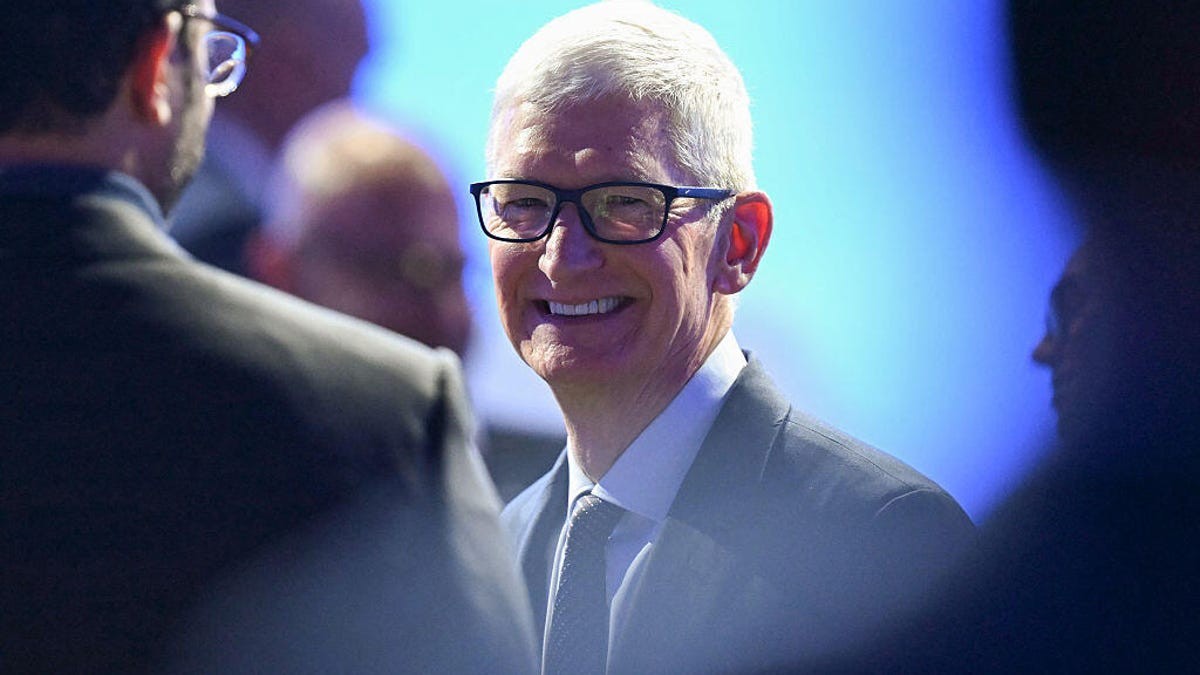
Apple CEO Tim Cook recently addressed speculation about his potential retirement, reaffirming his commitment to the company as it navigates significant shifts in technology and global economics. In an interview with Good Morning America, Cook dismissed rumors circulating since last November—some suggesting a CEO transition as early as next year—stating he “loves what [he] does deeply” after 28 years with Apple.
No Immediate Succession Plans
The discussion came during a visit to Wadleigh Secondary School in Harlem, highlighting Apple’s partnership with the Save the Music foundation. Despite reports from the Financial Times suggesting an imminent leadership change, Cook maintains no plans to step down, echoing skepticism from Bloomberg’s Mark Gurman. His tenure has overseen a near-quadrupling of Apple’s revenue, marked by continuous product evolution from iPhones to AirPods. The company is also poised to enter the foldable phone market later this year, further solidifying its position in innovation.
Navigating the Age of AI and Digital Wellbeing
Cook also touched on concerns surrounding smartphone usage, acknowledging that excessive screen time is detrimental. He expressed a desire for people to spend more time engaging with the real world rather than being “scrolling endlessly” on their devices, urging a balance between technology and human connection.
Apple’s approach to artificial intelligence (AI) remains cautious, with only $14 billion invested this year compared to the combined $700 billion spent by competitors like Amazon and Microsoft. Cook emphasized that AI itself is neutral, its impact determined by users and developers. Apple maintains that user data remains encrypted and inaccessible, with private cloud computing used only when direct device processing fails.
US Manufacturing and Political Ties
The interview also addressed Apple’s commitment to domestic manufacturing, aligning with Trump administration policies. The company pledged $600 billion over four years to increase US production, with plans to source iPhone glass from Kentucky and manufacture 100 million chip engines in Arizona this year. Cook described Apple as a “proud American company,” though he acknowledged the company’s previous engagement with the Trump administration, including a $1 million inauguration donation and private meetings.
Apple’s future hinges on navigating AI, maintaining user trust, and leveraging US-based manufacturing to meet evolving geopolitical demands.
Cook emphasized his focus on policy rather than partisan politics, but Apple’s strategic alignment with government initiatives—particularly tariffs—has raised questions about its role in shaping economic landscapes. The company’s continued success will depend on its ability to balance innovation with ethical considerations, political realities, and a growing awareness of the digital wellbeing of its users.