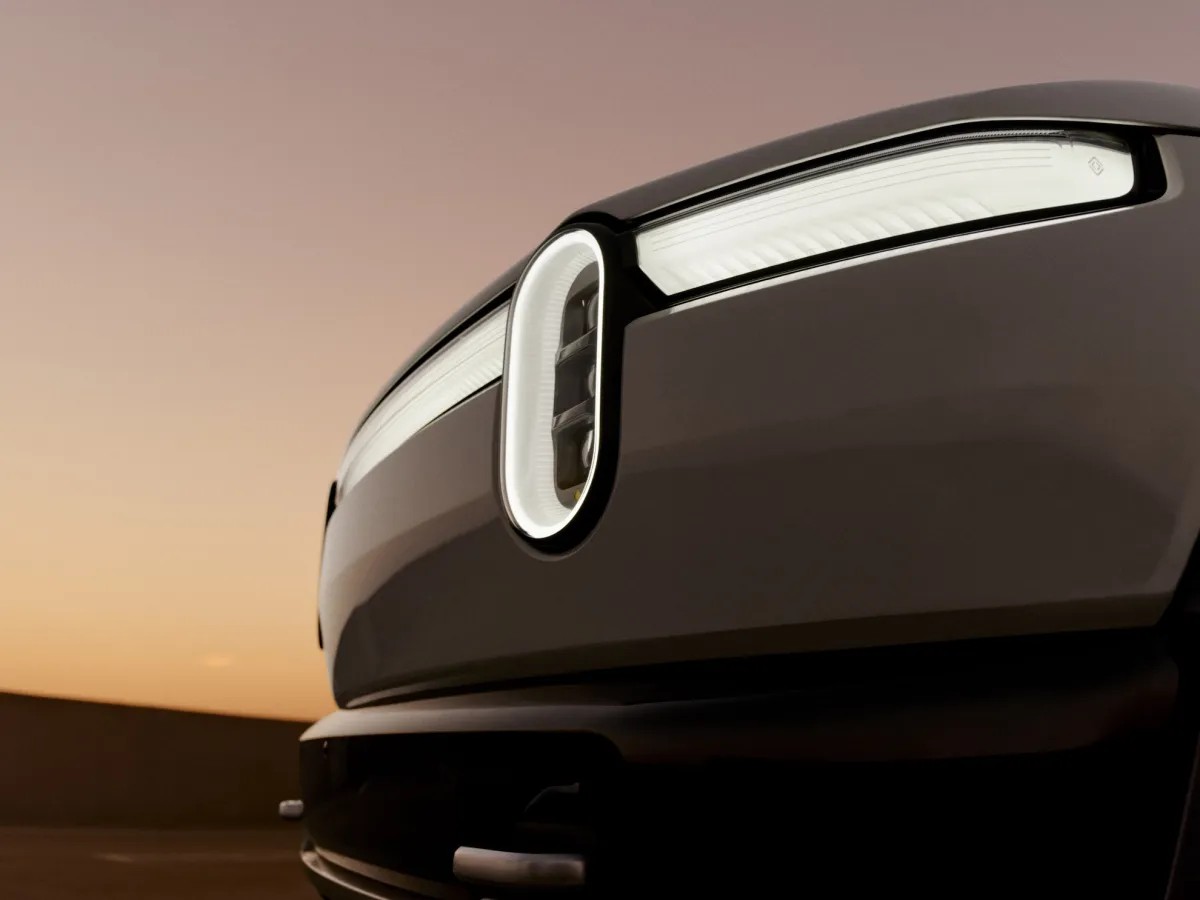
Electric vehicle maker Rivian has fundamentally restructured its financing and production plans for its upcoming Georgia manufacturing hub. In a significant pivot, the company has reduced its loan request to the U.S. Department of Energy (DOE) from $6.6 billion to $4.5 billion, while simultaneously increasing the initial production capacity of the plant by 50%.
This adjustment reflects a strategic move to improve efficiency and lower per-unit costs. By compressing the loan amount and accelerating the draw schedule to early 2027, Rivian aims to build a leaner, more scalable operation. The revised plan boosts the factory’s initial output from 200,000 to 300,000 vehicles, laying the groundwork for a total combined global capacity of 515,000 units across both its Georgia and Illinois facilities.
A More Efficient Footprint
The decision to increase initial capacity while lowering the loan amount signals a focus on operational leverage. A larger initial run allows Rivian to spread fixed costs over more units, directly improving margins.
“The strategic decision that we took was to increase the initial phase of production capacity to the 300,000 units,” said CFO Claire McDonough. “On our Georgia site, the full initial capacity will be put on the upper pad at the site. So we have the lower pad, which is still going to be entirely untouched green field for future expansion.”
While the first phase is now larger, the second phase remains undefined. Previously, Rivian planned for two equal phases of 200,000 units each. The current strategy leaves the “lower pad” of the Georgia site undeveloped, preserving flexibility for future expansion based on market demand. This contrasts with the company’s existing plant in Normal, Illinois, which has a fixed capacity of 215,000 vehicles.
The Uber Partnership: A Key Growth Engine
A critical component of Rivian’s new strategy is its deepening partnership with Uber. The Georgia factory will not only produce standard consumer SUVs but will also manufacture the R2 robotaxi, a fully autonomous vehicle designed for ride-hailing fleets.
Under an agreement finalized earlier this year:
– Uber is investing an initial $300 million in Rivian, with an additional $250 million planned for later in the year.
– Uber has committed to purchasing 10,000 R2 robotaxis ahead of a 2028 rollout in San Francisco and Miami.
– The ride-hailing giant holds an option to buy up to 40,000 additional units starting in 2030.
– Total potential investment from Uber could reach $1.25 billion through 2031, contingent on Rivian meeting specific development milestones.
This deal provides Rivian with a guaranteed B2B customer base, reducing the risk associated with launching a new autonomous vehicle line. It also validates the R2 platform’s potential beyond traditional consumer sales.
Financial Health: Narrowing Losses Amid Rising Investment
Despite the ambitious expansion plans, Rivian’s first-quarter 2026 financial results reveal a company in transition. The automaker reported a net loss of $416 million, a significant improvement from the $541 million loss recorded in the same period last year.
Key financial highlights include:
– Revenue: Total revenue reached $1.38 billion, driven by $908 million in vehicle sales and $473 million from software and services. Automotive revenue dipped slightly by 2% year-over-year, largely due to a decrease in regulatory credit income.
– R&D Surge: Spending on research and development jumped 20% to $458 million. This increase reflects heavy investment in R2 pre-production costs and the software infrastructure required for autonomous driving technology.
– Cash Flow Pressure: Free cash flow remained negative at $1 billion, nearly double the deficit from the previous year. This drain is attributed to rising operating expenses, increased capital expenditures, and higher R&D costs.
However, the narrowing net loss was partly aided by a $506 million gain in other income. This figure resulted from a Series A capital raise and the deconsolidation of CEO RJ Scaringe’s new startup, Mind Robotics, providing a temporary boost to the bottom line.
Production Timeline and Current Operations
Construction is underway at the Georgia site, located outside Atlanta, where Rivian broke ground late last year. The company is currently in the early stages of vertical construction and expects to begin vehicle production there by the end of 2028.
Until the Georgia facility comes online, Rivian will continue to manufacture its new R2 SUVs at its Illinois plant. The Illinois factory recently resumed production after suffering damage from a tornado, and Rivian has confirmed that initial deliveries to employees have begun. Customer deliveries are expected to start in the coming weeks.
Conclusion
Rivian’s revised strategy for its Georgia factory represents a calculated shift toward efficiency and scale. By securing a smaller loan for a larger initial output and anchoring its future with a major partnership with Uber, the company is positioning itself to compete more aggressively in both the consumer and autonomous vehicle markets. While cash flow remains a challenge, the narrowing losses and clear path to production suggest a focused effort to achieve profitability through volume and technological differentiation.