


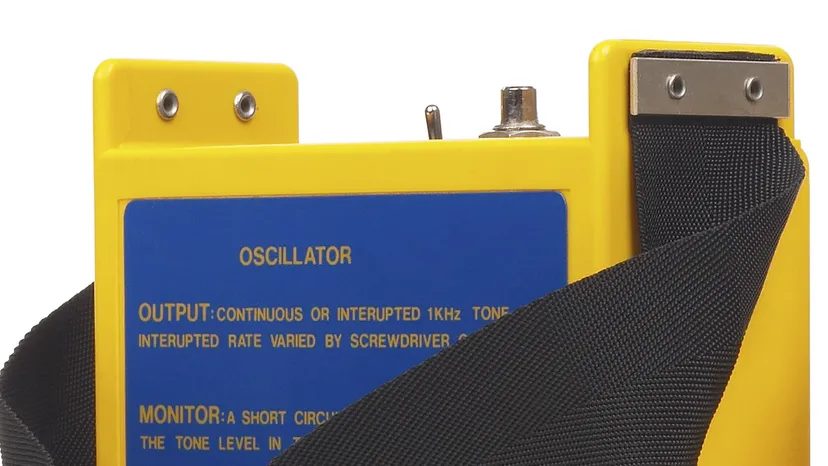
Look at your wrist. That quartz watch isn’t just telling time; it’s counting the vibrations of a tiny crystal. Look at your phone. It’s bouncing signals off towers using oscillators. They’re everywhere. In metal detectors. Stun guns. AM radios. Even the computer you’re reading this on.
They are the heartbeat of modern electronics. But what exactly is an oscillator, and why does it need a push to keep going?
The Core Mechanism: Positive Feedback
At its simplest, an oscillator is a circuit that creates a repeating signal. It doesn’t need an external input to keep generating that signal once it starts. How? Positive feedback.
Here is the trick. The circuit takes a portion of its own output and feeds it back into the input. This isn’t just any feedback. It reinforces the initial signal. It adds to it. If done right, the signal grows. If done perfectly, it sustains.
For this to work, two strict conditions must be met. First, the total loop gain must be equal to or greater than one. Put simply, the amplification must overcome any loss in the system. Second, the phase shift around the loop must sum to a multiple of 360 degrees. If these aren’t true, the signal dies out. If they are, you get sustained oscillation.
The core principle behind oscillator operation is positive feedback combined with an amplification process.
The Pendulum Analogy
To understand this, forget circuits for a second. Think about a pendulum clock.
You give it a push. It swings. Back and forth. At a specific frequency. That frequency is dictated by the length of the pendulum. Longer pendulum? Slower swing. Shorter? Faster.
But here is the catch. Friction exists. Air resistance. Internal stress in the metal. Without intervention, the pendulum stops.
An oscillator is the same. It moves energy back and forth between two forms. In a pendulum, that’s potential and kinetic energy. At the top of the swing, it’s all potential. At the bottom, all kinetic.
But it loses energy. So, the clock’s spring gives it a tiny push on each stroke. It replaces the lost energy. The pendulum keeps swinging. An electronic oscillator does the exact same thing. The circuit provides a “kick” to compensate for losses in the components.
Why It Matters for You
You might not see the oscillator, but you rely on it constantly.
Quartz watches use a quartz crystal oscillator to keep track of what time it is. The crystal vibrates at a precise frequency when electricity is applied. That regularity is what makes the watch accurate.
AM radios are built on oscillators too. The transmitter uses one to create the carrier wave for the station. The receiver uses a special type called a resonator to tune into that frequency. Without it, you’d just hear static.
Computers rely on clock oscillators to synchronize data processing. Every time your computer executes an instruction, it’s following a beat set by an oscillator.
The Bottom Line
Oscillators aren’t magic. They’re just clever applications of basic physics. Energy moves back and forth. Feedback reinforces the motion. And a small input keeps the whole machine alive.
Next time you check the time or tune into a station, remember the invisible pulse driving it all. It’s simple. It’s essential. And it’s everywhere.
The question isn’t really what they do. It’s what happens when we stop needing them. Or worse, when they fail.
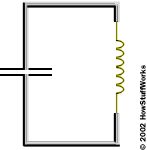

Energy has to travel back and forth between forms. Without that exchange, an oscillator is just a dead circuit. You can build a basic one by tying a capacitor and an inductor together. If you already know how capacitors store energy in electrostatic fields and inductors in magnetic fields, the rest is just watching the handoff.
Imagine charging a capacitor with a battery. Then you connect the inductor. The circuit wakes up. The capacitor discharges through the inductor. The inductor builds an electromagnetic field in response. When the capacitor is empty, the inductor doesn’t just stop. It keeps the current moving. It pushes charge onto the other plate of the capacitor. The inductor’s field collapses. The capacitor is now charged with opposite polarity. It discharges again. This loop continues until resistance in the wire drains the energy. The frequency of that swing depends entirely on the values of the inductor and capacitor.
Linear vs. Relaxation Oscillators
Oscillators generally fall into two buckets. Linear oscillators, also called harmonic oscillators, produce a clean sine wave. They rely on resonance. An LC or RC circuit sets the frequency. Common designs include the Colpitts, Hartley, and RC Phase Shift oscillators.
Relaxation oscillators are different. They generate non-sinusoidal outputs like square or sawtooth waves. They work by charging and discharging a capacitor through a resistor. The RC time constant dictates the rate. The unijunction transistor (UJT) oscillator and the 555 timer in astable mode are classic examples.
There are niche types too. Electronic devices use crystal oscillators for precision. Radio frequency applications need RF oscillators. Voltage controlled oscillators (VCOs) change frequency based on input voltage.
The Essential Components
An oscillator needs three things to keep going.
- Amplifier: This provides gain. It ensures the loop gain criteria are met so the signal doesn’t die out.
- Feedback network: This determines the frequency. It also ensures the phase shift criteria is met. It can be RC, LC, or a crystal circuit.
- Power supply: This feeds the energy. No power, no oscillation.
Understanding Waveforms
Oscillator waveforms are the shapes of the electrical signal output. They are graphical representations of voltage over time. The shape depends on the oscillator type and design.
Each waveform has specific uses. The most common include sine waves for smooth AC signals, square waves for digital clocks, triangle waves for linear ramps, and sawtooth waves for scanning applications.
Resonators

The Physics of Tuning In
You are sitting in your kitchen. The radio is on. Somewhere out there, thousands of electromagnetic sine waves are bouncing off the air. They hit your antenna. They are chaotic. They are messy. You are listening to one station.
How?
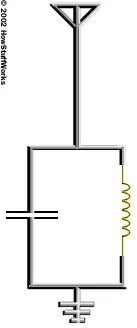
Inside that cheap plastic box is a simple oscillator circuit. It consists of a capacitor and an inductor. This combo acts as a filter. It ignores almost everything. It only lets one frequency through.
Think of it like a pendulum. If you push it at the exact right rhythm, it swings higher. Push it at the wrong time, and it dies. The capacitor and inductor do the same thing with radio signals. They resonate at one specific frequency.
When you turn the dial, you are not selecting a station from a list. You are physically changing the electronics. Most old radios use a variable capacitor. You twist a knob. The plates inside shift. The capacitance changes. The resonant frequency shifts.
Suddenly, the signal you want aligns with the circuit’s natural frequency. It gets amplified. The rest? Ignored. This is how you tune in. It is elegant. It is analog. It is fundamental.
Why Oscillators Matter Beyond Radio
This concept is not just for listening to jazz or news. It is the heartbeat of modern electronics.
Oscillators generate periodic signals. They provide timing. Digital circuits need a clock signal to function. Without a steady pulse, data becomes noise. Memory fails. Processors stall.
Communication systems rely on them too. To send information across vast distances, you need a carrier wave. That wave is generated by an oscillator. It modulates your voice, your video, your text. Without it, the internet as we know it would not exist.
The Evolution of Precision
As technology advances, these components become more precise. We moved from simple LC circuits to quartz crystals. Quartz watches use this principle. The crystal vibrates at a specific frequency when electricity is applied. It keeps time with incredible accuracy.
Atomic clocks take it further. They use the resonance of atoms. These are the most precise timekeepers we have. They power GPS satellites. They synchronize global networks.
The principle remains the same. Resonance. Amplification. Feedback.
Where to Look Next
If you want to dig deeper into how these components interact, start with the basics. Understand how inductors store energy in magnetic fields. See how capacitors hold charge. Then look at how batteries provide the steady current needed to keep the oscillation going.
Electronic gates form the logic behind the timing. You can simulate these circuits digitally. Explore feedback oscillator designs to see how a small signal sustains itself.
The world is built on these pulses. From the roller coaster dropping at the right moment to the metal detector beeping at a buried coin, oscillators are everywhere. They are the invisible rhythm of our connected world.
Next time you tune a radio, remember the physics at work. Thousands of waves. One signal. A simple twist of a knob. It all adds up.


