


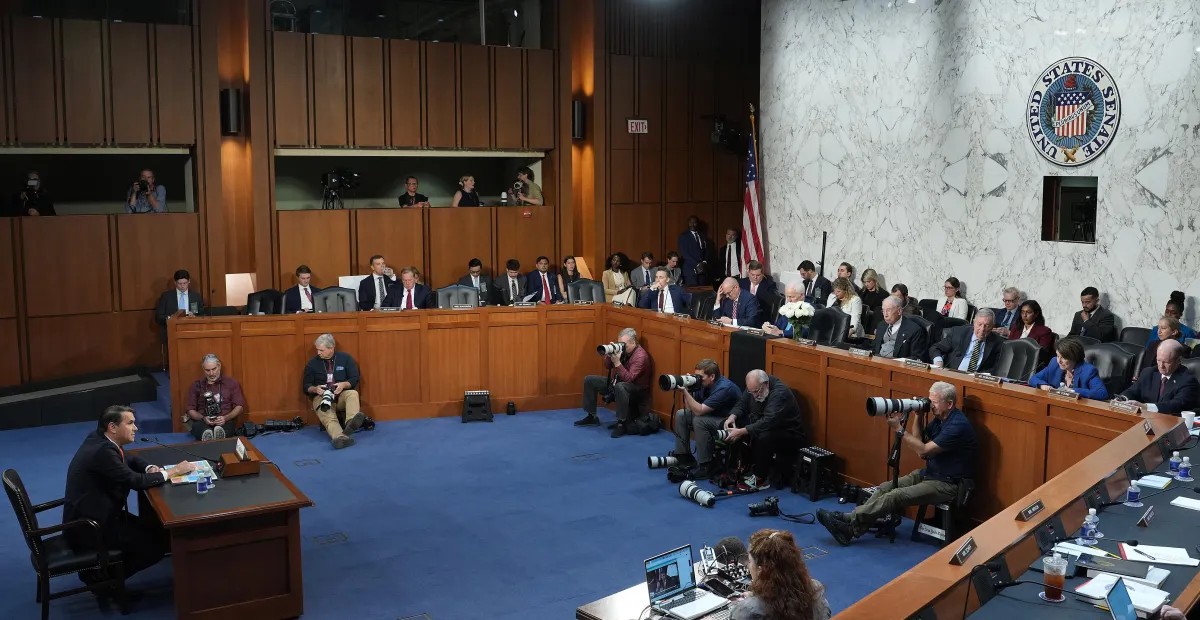
Todd Blanche just handed Democrats a win.
Sort of.
The acting Attorney General confirmed in writing over the weekend that the Justice Department is killing a proposed $1.8 billion “anti-weaponization fund.” It was supposed to be reparations for people claiming government misconduct. Instead, it looked like a backdoor slush fund. Blanche’s permanent appointment as Attorney General had stalled because of it. Even some Republicans pushed back.
Now the fund is rescinded. The Justice Department says it has no plans to revive the program.
This feels like a rare moment where the Senate’s confirmation power actually bit the White House. The confirmation process for Blanche is the latest friction point in a presidency obsessed with controlling federal cash flow.
Trump’s History of Secret Accounts
The anti-weaponization fund isn’t an isolated incident. It’s the latest attempt by President Trump to siphon federal money into accounts he or his allies can control. This pattern has defined much of his current term. Several earlier attempts at creating these financial bypasses actually worked.
Take Venezuelan oil.
Since the US helped topple Nicolás Maduro earlier this year, profits from oil sales have been routed into special Treasury accounts. Technically, they are labeled as Venezuelan sovereign property. In reality, they can only be released with direction from the Secretary of State. That’s a lot of leverage sitting in a ledger.
Then there is the Board of Peace.
Trump’s coalition for rebuilding Gaza looks suspiciously like a pay-to-play scheme. Countries get seats on the board for three years only if they drop $1 billion into the Trump-controlled organization. More than 20 countries signed on. Reuters reported in April that only two actually paid up. The rest bought influence without the price tag.
He also floated the idea of a US sovereign wealth fund during his first term. It was meant to let the government direct investments in private companies. It never fully materialized. However, the current administration has already acquired equity stakes in at least twelve firms. You might call it diversified investing. Or you might call it buying influence.
“The long-term risk is that his presidency normalizes treating the receipt and disbursement of money… as instruments of personal power”
Tad DeHaven, a policy analyst at the Cato Institute, put it plainly in an earlier Vox piece. The danger isn’t just potential illegality. It’s the precedent. It’s normalizing the use of public funds as tools for private control.
The Political Fallout
The push to kill the fund came from two specific senators.
North Carolina’s Thom Tillis. Texas’s John Cornyn.
Both are Republicans. Both forced a retreat. Both will leave the Senate in early 2027, according to current schedules. That timing matters. They were the only ones willing to rock the boat on this.
Trump didn’t like it.
On Saturday, he posted online insisting he would get some version of the fund regardless of senators’ objections. By Monday, he told reporters he hadn’t signed off on the rescission. He’s not letting go of the idea. He’s just waiting for the political cost to drop.
The dustup over Blanche’s confirmation showed that the White House isn’t invincible. The Senate can still say no. But the Senate is also a revolving door. Tillis and Cornyn are exiting soon. Who fills those seats? Will the new senators push back on slush funds? Or will they look the other way?
Blanche wants the job. He needs a clean record to get it. Killing the fund seems to be the price of admission. For now.
Beyond the Headlines
Happiness is overrated, apparently.
In a new book, author Ian Bogost suggests we should stop chasing happiness. Instead, we should pursue sensory gratification. It’s simpler. More immediate. It’s the feeling of shifting gears in a stick-shift car. Or holding a warm mug. Physical experiences over abstract joy.
Maybe that’s the vibe. Less thinking, more feeling. Even when the government is trying to hide its books.
We’ll see what happens after 2026. The fund is gone. The desire remains.


