E Ink.
It is cool.
Readable, battery-saving, and surprisingly close to the look of actual paper.
Adding a second screen?
Also cool.
The new Hisense A10 hits both notes, and frankly, it caught my eye immediately.
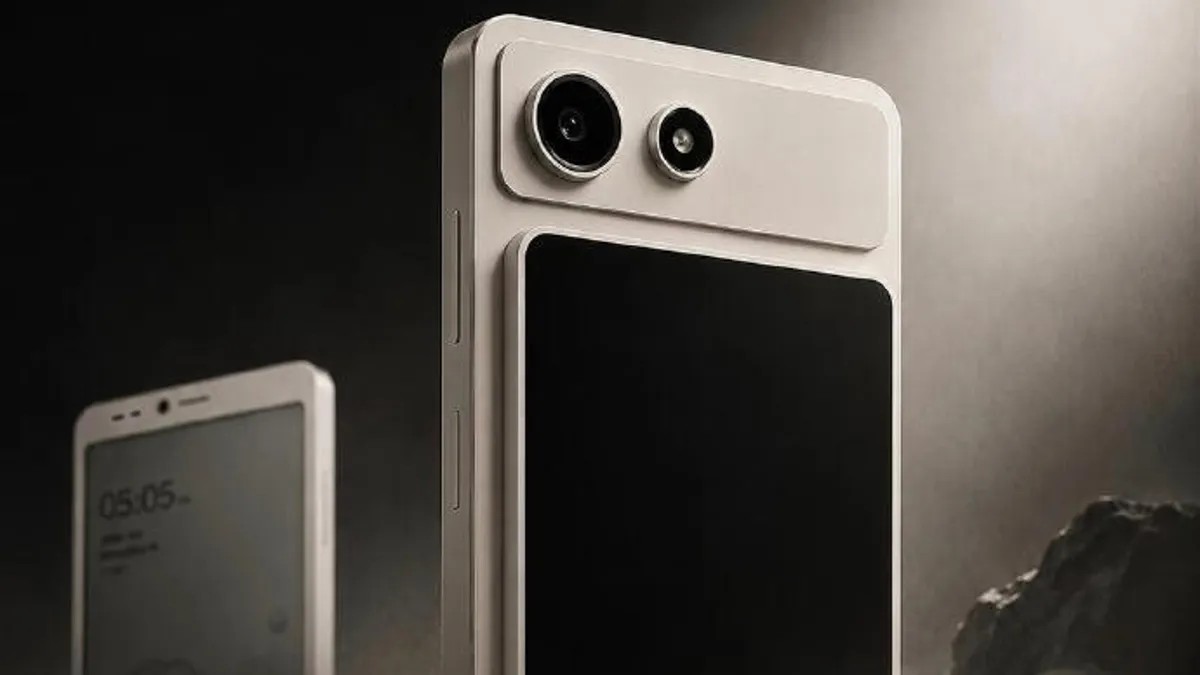
Hisense—a Chinese electronics giant better known for your living room TV and kitchen fridge—dropped news on the A10 Monday. Credible sources like Experience More on Weibo broke it down: the front sports an E-Ink display, while the back hides a detachable, colorful LCD screen. They teased it last month. Now it’s here, mostly for China anyway.
Price sits around $600 in China. US availability?
Murphy’s Law.
We will likely have to hunt through AliExpress, eBay, or other specialist importers if it doesn’t get a formal release here.
The back screen might not even come with the phone. Expect it as a separate add-on. Think of the Vamvo modules you stick on iPhones. Magnet-based. Flexible.
The A10 promises flexibility in the most literal sense.
Take just the main phone for calls and texts? Battery lasts forever.
Need to watch a video? Play a game? Attach the color screen.
How they talk to each other technically remains a mystery. Hisense hasn’t spilled those beans.
Specs?
6.13-inch black-and-white main display. Android 16. 5G.
It runs on a 4nm Qualcomm oct-core chip. Solid. But don’t mistake it for a beast—the Snapdragon 8 Elite leaves it in the dust.
Hisense stayed silent on my request for comment.
Typical.
The Appeal of Less
Most companies scream “bigger screen, more power.”
Foldables are everywhere.
Apple’s upcoming Ultra or Fold model has everyone nervous and excited.
Hisense went a different direction.
A second screen, yes.
But paired with E Ink.
The E-Ink phone niche is small, sure, but it’s moving fast.
No glare. No eye strain.
The trade-off is speed.
Fast scrolling? No.
Netflix in the dark? Don’t count on it.
But the simplicity is the point.
I have owned Kindle e-readers and Kobos.
Reading feels natural because the matte, glare-free screens mimic paper.
It’s comforting.
The A11 idea marries that calm with the versatility of actual apps.
Tech reviewer Austin Evans, with his 6 million YouTube followers, likes it.
He sees a return to minimalism that doesn’t require giving up your smartphone life entirely.
“We know we spend too much time doom-scrolling,” he told CNET, pointing out the trap of modern convenience. “An E-Ink phone is generally compatible with apps, but the screen can’t handle it.”
So there you have it.
A smartphone that works like a smartphone.
One that refuses to addict you.
Do we really need more pixels, or do we need more time?
Maybe Hisense knows something the rest of us have forgotten.
Or maybe I am just nostalgic for a phone that didn’t want me to look at it.