There’s a new machine learning how to drill into your teeth. Well. It drills them directly. Without shaking your hand first.
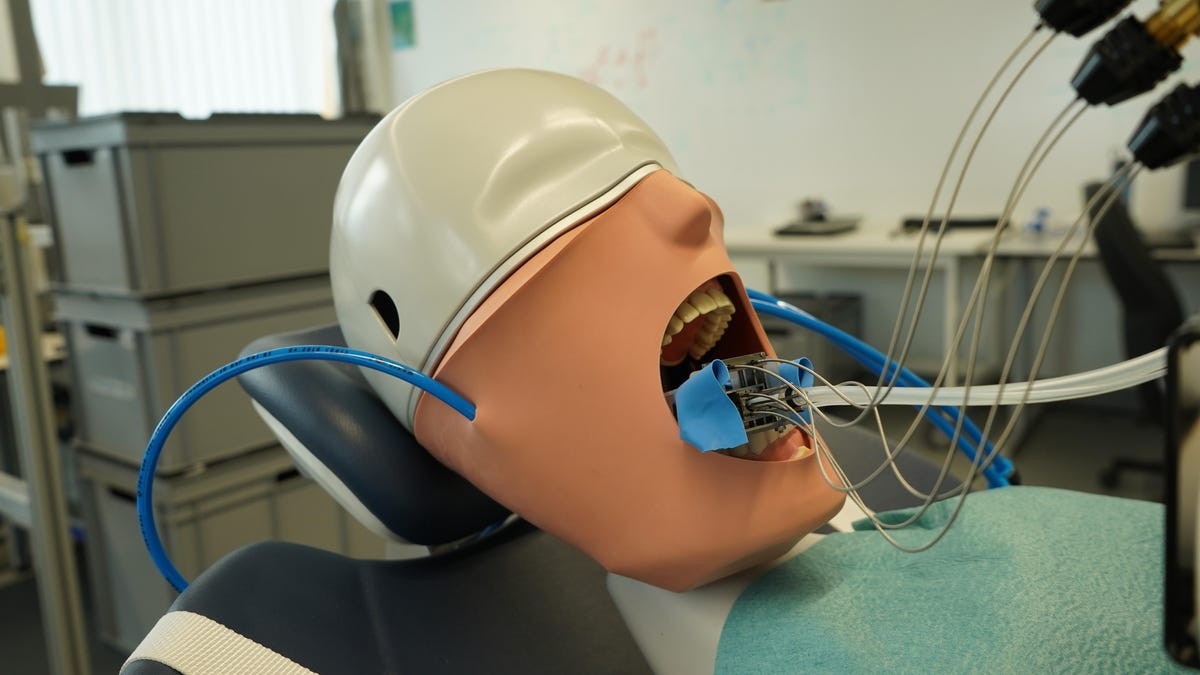
Developers at the University of Basel are working on a prototype called the MIR. The name stands for Miniature Intraoral Robot. It is small enough to sit right on your molars.
This is a direct answer to a very specific, long-tail problem: how does the MIR robot speed up dental crown treatment?
Currently. The process is slow. You find decay. The dentist drills. They slap on a temporary crown. You go home. You come back days or weeks later for the permanent one. It takes time. It takes trips. It disrupts life.
The MIR wants to cut that in half. Or maybe more.
By automating the drilling during the initial scan, the dentist can prep the tooth immediately. They take the measurements right there. An order goes out. You might still wait for the crown to be made, but the mechanical work? That happens in one visit.
It works by clamping down. The robot attaches to a custom dental splint that sits on your teeth. You move your head. The robot moves with you. It doesn’t get dizzy. You don’t get cross-eyed watching the dentist try to keep up with your subtle flinches.
The heavy parts stay outside. Motor. Controls. Wires.
It connects via a drive shaft. Think of it like a car’s transmission. The power stays put. The torque transfers inward. Through a cable. Into the mouth. To the bit.
So far, this is all theoretical. In practice, anyway.
Tests have been limited to fake ceramic teeth. In fake mouths. No humans yet.
The team needs to add sensors. And a camera. These are for tracking. Specifically for keeping track of position if the lights go out. Because a power outage in a dental chair with a motorized drill in your face is a horror movie scene waiting to happen.
Which leads to a bigger question. Is this safer than a human hand?
That is the real comparison query users are digging for. Stability vs. touch. The MIR promises consistency. A human hand trembles. Tiredness sets in. Fatigue kills precision.
A robot doesn’t get tired.
It does require power.
The robot is not ready for prime time. Yet.
They have a way to go. Sensors need integration. Calibration needs hardening. But the concept? It shifts the entire timeline of restorative dentistry.
Maybe next time you sit in the chair. The thing biting you is built in Switzerland.
And it doesn’t talk.