The tech industry moves fast. Really fast. You can’t look away.
But nothing screams “rapid change” like the television. In the 1950s, you dropped about 1000 D-Mark on a set. Today? Roughly 96 percent of German households own one. Often two. Sometimes more. And they aren’t the bulky boxes of yesterday. Flat screens are taking over. By 2011, more than one in three homes had at least one flat-panel display.
It’s not just about having a screen anymore. It’s about what the screen is.
The origins of the “electric telescope”
Early on, people didn’t just call it TV. They called it “electric sight.” Or “telegraphic sight.” Even “Telephanie.” Sounds like a phone call from the future, right?
Paul Nipkow, a German engineer, cleared the path in 1884. He invented the “electric telescope.” It used a rotating disc—the Nipkow disc—to break images down into light and dark signals. Then it put them back together. Simple concept. Terrible execution, at the time. The tech just wasn’t there.
Then came the Russians. Boris Rosing got a patent shortly after 1900 for transmitting and receiving images. Leon Theremin managed daylight transmission using tiny mirrors instead of holes in a disc. Smart. But the Soviet intelligence services saw something else. They used it for personal surveillance. Publication was banned. The secret died with the state.
Meanwhile, Ferdinand Braun developed the cathode ray tube in 1897. That became the real workhorse. For decades, the “Röhre” (tube) sat in German living rooms. You can’t buy one now. They’re gone. Replaced by plasma, LCD, and now LED flat screens.
We’ve moved from HD Ready to Full-HD. Now we’re staring at 3D-capable sets that mostly sit idle, waiting for content that rarely arrives.
Why we pay for TV when free exists
Back in the day, you had three channels. That was it.
Now? You can pull in thousands of stations from around the globe. If you have a satellite dish, anyway. You need a receiver to decode the signal. Or you can use DVB-T, cable, or Pay-TV.
People pay for Pay-TV. Why? The numbers don’t lie. Between 2001 and April 2012, the number of German customers paying for premium TV more than doubled. From 2.1 million to 5.4 million.
Is it worth it? Most buyers say yes. The main reason? Quality. Specifically, no ads. Watch when you want. Watch what you want. Series, movies, documentaries. No commercial breaks interrupting the tension. For many, that convenience is the hook.
But the internet changed the game again. Mobile TV is standard. At home, it’s different. We use stream devices like Apple TV to mirror our laptops onto the big screen. Multimedia players let us watch downloaded films or YouTube videos without hunching over a computer monitor. It’s freedom. Sort of.
Getting the cinema feeling at home
We want the experience. Not just the picture. The feeling.
Old tubes couldn’t do it. They were heavy, warm, and dim. Modern LED and LCD panels are different. Bright. Sharp. Thin. The jump from HD Ready to Full-HD isn’t just marketing fluff. It’s real pixels. More detail.
But hardware is only half the battle. The other half is how we consume. Streaming boxes bridge the gap. They turn the TV into a portal. Not just for broadcast signals, but for the cloud.
You download a movie. You plug in a USB stick. You stream a series. The TV is no longer a passive receiver. It’s an active window.
And yet, we still sit on the couch. We still watch. The tech changed. The habit didn’t.
So, why do we keep upgrading? Is it the resolution? The size? Or just the fear of missing out on the next big thing?
The Nipkow disc is gone. The cathode ray tube is obsolete. But the desire to see something we can’t touch remains. Exactly as it was in 1884.
Projectors age differently than flat panels
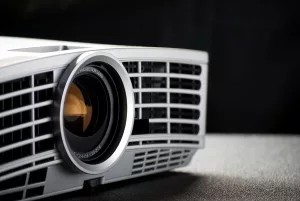
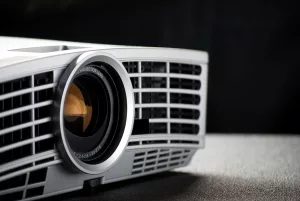
The upfront cost is brutal. Sure, you can find a projector for 500 euros. But that gets you mediocre light. Real quality? That starts at 1,000 euros. And it goes up from there. The price ceiling is basically open.
Buying the hardware is only step one. A projector alone isn’t a home cinema. You need a proper screen. You need a sound system. Only then do you have the full package.
Why projectors last longer than TVs
TV technology moves too fast. A flat-screen bought today might feel obsolete in a year. The price of consumer electronics plummets constantly. Old TVs end up in the trash. It’s a cycle of waste.
In 2005, Germany’s 41 million households produced 110,000 tons of electronic waste. The Federal Statistical Office recorded it. Countries like the US and Australia export their e-waste to developing nations. They do it to avoid environmental damage at home. It’s the “throwaway society” in action.
Projectors don’t follow this pattern. The core tech doesn’t change overnight. A high-end unit from five years ago still performs well today. You aren’t chasing quarterly updates.
Sustainability isn’t just a buzzword here. It’s a financial reality.
The screen stays relevant. The projector lasts. You aren’t replacing your setup every two years because a new panel resolution dropped in price.
Does the home cinema setup reduce e-waste?
Yes. If you keep the same projector for a decade, you generate zero e-waste from that device. Compare that to swapping TVs every three years. The math favors the projector.
But you have to buy right. Cheap projectors die fast. Bulbs burn out. Lenses degrade. The 500-euro entry-level models are the ones that end up in the landfill.
The 1,000+ euro range builds differently. Better cooling. Solid construction. Longer lamp life. You pay more upfront. You save later.
Is it worth it? If you hate throwing things away, yes. If you care about the 110,000 tons of trash piling up, yes.
The future of home entertainment isn’t about the next shiny gadget. It’s about keeping what you have.