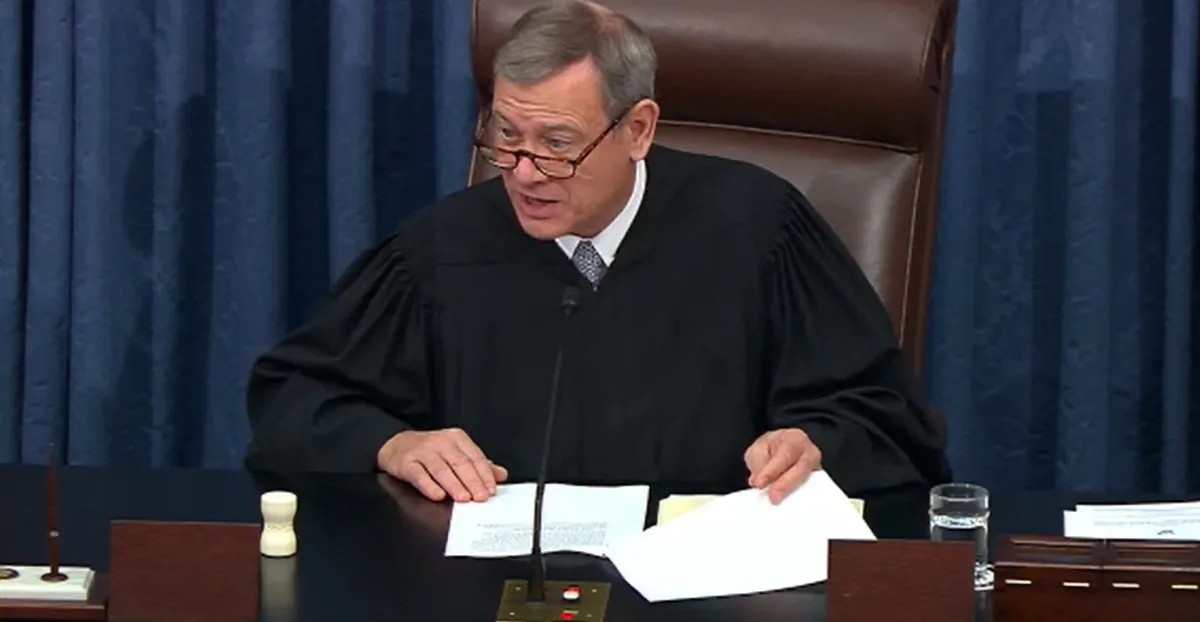
The U.S. Supreme Court is actively reshaping the balance of power among the legislative, executive, and judicial branches, tilting it decisively in favor of presidential authority and judicial oversight. The upcoming decision in Trump v. Slaughter, scheduled for December 8th, exemplifies this trend: the Court is poised to further consolidate executive control over federal agencies, diminishing Congress’s oversight role. This is not an isolated event, but part of a long-term project by the conservative justices to redefine the foundations of American governance.
The Erosion of Congressional Authority
For decades, a faction of right-wing legal scholars has advocated for a stronger executive branch. Now, with a conservative supermajority, the Court is turning theory into reality. The upcoming ruling in Trump v. Slaughter will likely eliminate Congress’s ability to create truly independent federal agencies, stripping them of the power to operate without direct presidential interference. This aligns with previous decisions, such as Trump v. United States (2024), which upheld broad presidential immunity, including the ability to commit crimes while in office.
This shift fundamentally weakens Congress. The Court is not simply clarifying existing law; it’s actively rewriting the rules of governance, concentrating power in the hands of the executive and, increasingly, the judiciary itself.
The Rise of Judicial Veto Power
Alongside diminishing congressional authority, the Court is expanding its own influence through the “major questions doctrine.” This allows the Court to strike down federal policies if it deems them to exceed the scope of congressional authorization, effectively giving the justices a veto over significant executive branch actions. The Court has never agreed on where this doctrine comes from, some claiming it derives from historical precedent, while others cite vague constitutional principles.
The reality is that this doctrine is novel. For most of American history, the Court avoided such direct interference in executive policymaking. Now, it is asserting the right to invalidate laws based on subjective interpretations of what constitutes a “major” issue.
The Unitary Executive and Presidential Control
Underlying these changes is the “unitary executive” theory, which argues that the president holds absolute control over all executive functions. This theory, once fringe, is now championed by the Court’s conservative majority. The argument hinges on a vague line in the Constitution stating that “executive power shall be vested in a President.”
The Court has twisted this into the belief that the president must have full control over every federal agency and official, regardless of Congress’s attempts to create independent oversight. This allows the president to fire agency heads at will, even if they are acting in accordance with the law.
Historical Context and the Founders’ Intent
The current Court’s aggressive reinterpretation of the separation of powers flies in the face of historical practice. Early American lawmakers created commissions with members the president could not remove, including appointments to the judiciary and the vice president. The first Congress delegated broad authority to executive agencies, including the power to grant patents and govern territories.
The framers of the Constitution did not envision such a rigid division of power. The Court’s current project is not about restoring original intent; it’s about imposing a new, ideologically driven vision of governance.
The Long-Term Implications
The Court’s actions are not merely about empowering Trump; they are about permanently altering the structure of American government. The Court is expanding its own authority while simultaneously weakening the legislative branch, making future presidents more powerful and less accountable.
This is a dangerous trend, as the Court’s newfound power will not disappear when a more moderate president takes office. The precedent has been set, and the balance of power has shifted in ways that could have lasting consequences for American democracy.
The Court’s remaking of the separation of powers is a deliberate, calculated effort to concentrate power in the executive and judicial branches, undermining the checks and balances that have defined American governance for centuries.