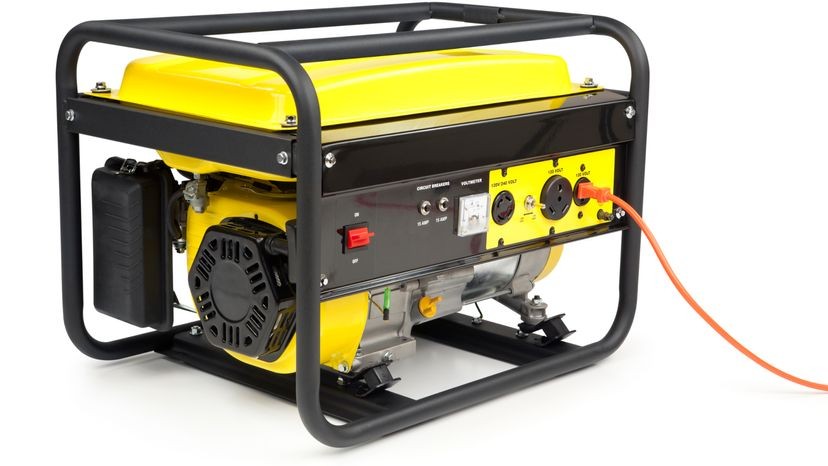
We are not going to build a power plant connected to the electricity grid. We are building a small experimental generator for demonstration purposes. Whether it’s a city’s electricity production or supplying a single LED lamp with electricity, the physics phenomena are the same.
A generator is basically an energy converter. It converts kinetic energy (motion) or thermal energy into electrical energy. The central principle is simple: a changing magnetic field induces an electric current in the coils. You don’t need a doctorate to build. All you need is a wire, magnets and something that can spin.
Here’s how to build a basic operating model.
Components and Assembly
First, you need to decide on the main engine. What gives you a spin? A fixed bike is the best choice. Any spinning axle works.
Next, create the armature. Take the copper wire and twist it into a large loop. Make connecting ends easy. The more coils there are, the higher the voltage. This is a direct trade-off.
Attach this loop to your power source. If you are using a bicycle, attach the loop to the axle. Make sure it is well supported. Avoid contact with pedals and moving parts. Friction reduces efficiency.
Next, let’s talk about magnetic fields. Place a strong magnet around the coil. The loop must rotate freely between them. Align the magnetic poles to maximize the strength of the magnetic field. Place the south pole of one magnet towards the north pole of the adjacent magnet. This creates a strong concentrated magnetic field in the center of the coil.
Connect the output to the load. In the basic test, the energy source is connected to a battery or a small light bulb and the current flow is checked.
Pedal. Spin. As the loop rotates in the magnetic field, the magnetic flux changes. Electrons move. You have generated electricity.
“A generator converts thermal or kinetic energy into electrical energy by capturing kinetic energy.”
DIY Generator Breakdown
Is it practical to build your own generator? Absolutely. While this guide covers small models, the internet is full of tutorials for larger, more complex builds. Look for specific dimensions based on your power needs.
What kind of materials are actually involved? A real generator requires a frame, rotating shaft, bearings, field windings, armature, stator (fixed magnetic part), commutator and brush assembly. For our experiment, we strip it down to the essentials: wires, magnets and rotating mechanisms.
Can any engine be turned into a generator? Almost. most engines can generate current if they are connected correctly, rated for the load and the operating limits are respected. The most important thing is to match the power of your engine to the power you want to provide.
How does it work in practice? It is due to electromagnetic induction. Motion is captured. This kinetic energy is transferred to the wire loop. When the coil passes through the magnetic field lines, an electromotive force is created. The result is electricity.
The science is old. A flexible application. Just start spinning.