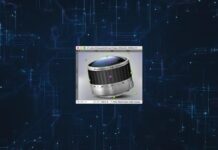
It’s a mouthful to say, but the concept is simple: mixing mirrors and lenses to bend light.
Optics has two main personalities. Catoptrics deals with reflection. Light hits a surface and bounces off. Dioptrics handles refraction. Light passes through a medium and changes direction. Most high-end optical systems don’t pick a side. They use both. This hybrid approach defines the catadioptric system.
The result is a device that does something clever with space. You get a long focal length without the massive tube length. Or, you keep the tube short but maintain high performance. It’s engineering efficiency at its core.
The Physics of Combined Reflection and Refraction
A catadioptric telescope isn’t magic. It’s just geometry and glass.
The setup typically pairs a concave mirror with a specific lens. The mirror gathers light. The lens corrects errors. Pure mirrors suffer from spherical aberration. Pure lenses suffer from chromatic aberration. Combine them, and you cancel out a lot of the noise.
Think of the Schmidt-Cassegrain or the Maksutov-Cassegrain. These are the heavy hitters in amateur astronomy.
“The integration of curved surfaces in architectures like the Schmidt-Cassegrain allows for the correction of optical defects majorly present in purely refractive or reflective systems.”
The light bounces off the primary mirror. It hits a secondary mirror. It passes back through a corrector lens. The path is folded. This folding is what allows a 200mm focal length to fit into a tube that’s only 300mm long. A refractor telescope with the same specs would be a nightmare to carry.
The Ritchey-Chrétien is another variant. It’s favored for astrophotography. Why? It eliminates coma and field curvature. You get flat fields across the sensor. No need to hunt for the perfect focal plane. The image stays sharp from corner to corner.
Why Astronomers and Photographers Choose Catadioptrics
Portability is the main sell. But it’s not just about packing light. It’s about reach.
In astronomy, viewing faint, distant objects requires light gathering power. A large aperture helps. But large mirrors mean large, heavy tubes. Catadioptric designs solve this. You get a wide aperture in a compact package. The Maksutov-Cassegrain, for example, offers excellent contrast. The sealed tube keeps dust out. Less maintenance for the observer.
In photography, the story is slightly different. These lenses are often called “mirror lenses.” They are incredibly long. 500mm, 1000mm. And they are surprisingly light. A standard telephoto lens at that focal length would be massive and heavy. Mirror lenses change that.
But there’s a trade-off. The light path is blocked in the center by the secondary mirror. This creates a specific aesthetic.
You can’t adjust the aperture on most mirror lenses. It’s fixed. Usually around f/8. You lose control over exposure time and depth of field. But you gain the “bokeh donuts.”
The background blur isn’t smooth. It forms rings or donuts. This isn’t a flaw. It’s a signature. For wildlife photographers, the reach is worth the aesthetic quirk. The lack of chromatic aberration is also a huge plus. Colors remain pure. No purple fringing on high-contrast edges.
Catadioptric Reflectors: The Safety in Your Bike Box
Don’t confuse the telescope with the plastic square on your bicycle.
In everyday life, a catadioptric refers to a reflector. It’s that red or clear plastic cube on your rear wheel. It’s also in car taillights.
The principle is the same physics, different application. It’s called retroreflection.
The device contains thousands of tiny lenses pressed against a mirrored surface. Light hits the lenses. It bends. It hits the mirror. It bends again. It exits.
Where does it go?
Back toward the source.
If a car’s headlights hit a bike reflector, the light bounces straight back to the driver’s eyes. This works regardless of the angle. That’s why the geometry is so precise. Tiny prisms or cubes handle the total internal reflection.
This isn’t just convenient. It’s regulatory.
Most countries mandate these reflectors. They are cheap. They are durable. They require no battery. They simply make you visible. Without them, night riding is significantly more dangerous. The human eye is better at detecting retroreflected light than ambient scattered light.
It turns a dark silhouette into a bright marker.
The same logic applies to road signs. Reflective sheets use this micro-prism technology. They catch the headlight beam and send it back to the driver. It buys reaction time. It saves lives.
The Unfinished Lens
We’ve looked at the science. We’ve looked at the astronomy tubes. We’ve looked at the bike reflectors.
The thread connecting them all is efficiency. Whether you are trying to see a galaxy billions of light-years away or just want to not get hit by a taxi, the goal is the same. Get the light where it needs to go with the least amount of bulk.
Catadioptric systems prove that you don’t need to choose between reflection and refraction. You can have both.
There are still debates in the optics community about the future of mirror lenses in photography. As sensor technology improves, the fixed aperture limitation becomes more annoying for video shooters. But for stills, they remain a niche tool.
Astronomy is evolving too. Adaptive optics are adding layers of complexity to these classic designs. We’re correcting the atmosphere, not just the instrument.
The basic principle holds. Mirrors and lenses working together. It’s a simple idea. But it’s powerful.
What happens when we shrink these systems down to the nanoscale? We’re already seeing it in VR headsets. Pancake lenses use folded light paths. It’s basically a miniaturized catadioptric system.
The technology isn’t going anywhere. It’s just getting smaller. And sharper. And harder to ignore.
How AI and Advanced Materials Are Rewriting Catadioptric Design
The manufacturing side of catadioptric systems is shifting. We are not just polishing glass anymore. New techniques allow for tighter tolerances. Researchers are building mirrors with multi-layer coatings that reflect more light. Anti-reflective treatments on lenses have also improved. The result is instruments that are brighter. They are tougher. And they have nearly zero distortion.
Miniaturization is happening too. The tech is smaller but performs better. This matters because it opens up new uses.
Real-Time Aberration Correction
Photonics is changing the game. Artificial intelligence now corrects optical aberrations in real time. This was impossible a few years ago. Now, systems adapt as they capture images.
This creates practical applications. Space observation benefits. Earth surveillance gets sharper. Remote sensing is more accurate. Medical imaging sees clearer details.
Future Applications Beyond Traditional Optics
These hybrid systems have a small footprint. They are precise. That makes them ideal for other sectors.
- Autonomous robotics
- Planetary exploration
- Compact surveillance drones
Where else will we see this? Any field where optimizing the light path is critical. Catadioptric concepts will appear more often. The trend is clear. Integration of AI and photonics ensures these systems remain relevant.
The evolution isn’t slowing down. It’s accelerating. Users get better data without carrying bulkier gear. That’s the real win.
“The emergence of photonics and AI integration opens new applications for catadioptric systems.”
Robustness meets precision. That combination drives adoption. It’s not just about optics anymore. It’s about smart, adaptable hardware.
Expect to see more of this in consumer tech. The boundary between professional and personal tools is blurring. Catadioptric designs help bridge that gap. They offer high performance in small packages.
How will this affect everyday users? Less distortion means clearer photos. Better low-light performance. More reliable data from sensors. It sounds technical. It’s practical.
The future of imaging isn’t flat. It’s curved. And it’s getting smarter.