
You have a phone. You have a tablet. You have earbuds. Somewhere in a drawer there are tangled cables that only work on one of these devices. It’s annoying. It is inefficient. Wondering if there is a cleaner way to keep your equipment running.
Enter the wireless charger. You place the device on a flat surface and the power appears. No cables. No plugs. Just magic? No. It’s physics. More precisely, it is magnetic induction.
This is not science fiction. It is a practical application of principles discovered over a hundred years ago. We remove the marketing fluff and take a close look at how these pads transmit energy to your smartphone.
Tesla’s vision of electricity without cables
Nikola Tesla was not only an inventor; he was a disruptor. In the late 1800s and early 1900s, he came into conflict with giants such as Thomas Edison and Guglielmo Marconi. He laid the foundation for alternating current (AC) and radio transmission. But he also had a bigger dream: a world without cables.
In 1902, Tesla applied for a patent entitled “Apparatus for the transmission of electrical energy”. He envisioned a system that could broadcasting electricity from one conductor to another without physical contact.
Tesla’s vision failed due to engineering limits and money. But the idea remained.
Early experiments tried to use radio waves to transmit energy. Consider a crystal radio. It uses a long wire antenna, a diode and a crystal earpiece. No battery required. The radio waves themselves carry the energy that drives the sound.
However, there is a problem. Radio waves travel in all directions. By the time they reach the receiver, most of the energy has been lost. It is inefficient. Engineers needed a more tighter, more focused approach. They found it in magnetism.
Daniel Watts Troy’s Contribution
Tesla wasn’t the only one to thinking about this. In 1903, Daniel Watts Troy applied for a patent for a method of wireless power transmission. His work, along with Tesla’s laid the foundation for the technology we use today. It turns out that broadcastingring electricity through air requires precision, not just broadcasting.
The relationship between magnets and electricity
To understand how wireless chargers work, you need to understand electromagnetism. It is the force that powers countless electronic devices.
Start with a simple electromagnet. Take an iron nail. Wrap an insulated copper wire around it. Connect the ends to a battery. Current flows through the coil. This creates a magnetic field around the nail. The nail becomes a magnet.
If you alternate a battery connections, the polarity alternates. North becomes south. South becomes north. The magnetic field alternates direction.
Now bring a second coil of wire close to the first. Don’t touch it. Just place it nearby. If you connect the second coil to the voltmeter, you will see the needle move. Why?
Because the magnetic field of the first coil alternates. This changing field induces a flow of electrons in the second coil. This is called electromagnetic induction.
A stable magnetic field does nothing. It must alternate. It must pulse. This is why direct current (DC) alone does not work in induction. The current must alternate.
Alternating Current and Inductive Coupling
Most household electricity is alternating current (AC). The current flows in one direction and then the other hundreds of times per second.
When you connect an electromagnet to alternating current, the direction of the current alternates continuously. The magnetic field expands, collapses, reverses and expands again. It is a constantly changing magnetic field.
That’s the key. A stable magnet cannot induce a current in a nearby coil. You can make a alternate.
If you wrap the wire around a nail and randomly alternate the direction of the current, the magnetic fields cancel out. You get nothing. But when you synchronize the alternates, you create a strong, oscillating field.
Wireless chargers use this oscillating field. The charger pad contains a transmitter coil. It is powered by alternating current. It creates a high frequency magnetic field. The phone has a receiver coil. When you place the phone on the pad, the receiver coil is in the transmitter’s magnetic field. The field changes rapidly. This induces alternating current in the phone coil.
This current is then converted back to direct current to charge a battery.
Limits of efficiency
It’s not perfect. Energy is lost during the conversion. Heat is generated. For maximum efficiency, the coils must be closely aligned. If you place the phone off-center, the magnetic field will be weaker. The charging slows down or stops.
This is why alignment is important. This is why you feel the pad get warm. It’s not magic. It’s physics. And it’s messy.
But it works. And for many people, the trade-off is worth it. No more searching for the right cable. No more tangled cables. Just place and charge.
Technology has developed since the days of Tesla. The coils are smaller. Frequencies are higher. Efficiency is better. But the basic principle remains the same. When you alternate the magnetic field, you alternate the current.
Is it the future of power transmission? Perhaps. For now, it’s just a convenient way to keep your device running.
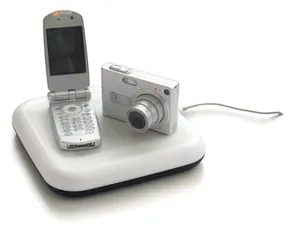
Most wireless charging pads rely on inductive coupling. It’s a simple concept. You plug a mat into the wall. Inside, coils create a changing magnetic field using alternating current from your outlet.
Your phone needs to interact with that field. Native support is rare. The Palm Pre once featured it, but most devices don’t. You need a special case or adapter. These sleeves contain a matching coil. You place your device on the mat. The magnetic field induces electricity inside the coil. That current charges the battery.
No direct current flows between the mat and the phone. It’s safe to grab the gadget.
But the tech has limits. Distance matters. Move the phone slightly to the side and charging stops. Some pads try to fix this with raised ridges or printed outlines. They force alignment. They ensure the coils are close enough to work.
Inductive coupling dominates the market. It isn’t the only option. Other methods exist. Conductive connections. Radio transmissions. Wi-Fi?
The Limits of Magnetic Fields
Inductive charging works well for low-power devices. Phones. Watches. Earbuds. The range is short. Usually less than an inch. That’s why precision placement matters.
If the coils misalign, energy transfer drops sharply. Efficiency suffers. Heat builds up. The charging slows or stops. This is the main frustration for users. You have to line it up just right.
Some manufacturers address this by adding feedback loops. Sensors detect misalignment. The pad adjusts power or alerts you via an app. Others use multiple coils. They scan for the device. They activate only the coil nearest to the phone. This improves efficiency. It reduces wasted energy.
Alternatives to Induction
Induction is common. It isn’t the only way. Other technologies promise different benefits.
Conductive charging uses physical contacts. Pogo pins. Metal pads. The device docks. Electricity flows directly. No magnetic field needed. This method can be more efficient. It handles higher power. But it requires precise alignment. And the contacts can wear out. Or collect dust.
Radio frequency (RF) charging is another option. It uses electromagnetic waves. Like Wi-Fi. Or Bluetooth. The waves carry energy. A receiver captures them. Converts them to DC power. This allows charging over longer distances. Maybe a few meters. But the energy density is low. It’s slow. Suitable for small sensors. Or low-power IoT devices. Not for fast-charging smartphones.
Resonant coupling is a variation of induction. Both the transmitter and receiver resonate at the same frequency. This allows for better efficiency. And slightly longer range. Maybe a few centimeters. It’s still in development. Not yet mainstream.
Why It Matters
Wireless charging convenience is real. No cables. No wear and tear on ports. Just drop and charge. But the tech is imperfect. Efficiency varies. Compatibility is fragmented. Not all phones support it. Not all pads support fast charging.
The future might hold hybrid solutions. Induction for immediate charging. RF for ambient trickle charging. Or conductive docks for high-power needs.
Until then, you’re still dealing with alignment issues. And limited range. The mat stays on the desk. You pick up your phone when you’re ready. The battery fills. Slowly. Quietly.
What happens when you need to charge multiple devices? Or move around the room? The current solutions don’t answer that yet.
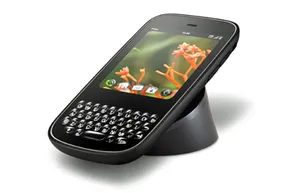
If inductive pads feel a bit like magic but lack precision, conductive charging is much more literal. It completely bypasses magnetic fields, creating a direct circuit. The hardware is straightforward: a charging mat embedded with strips of conductive metal. When your phone touches these strips, power goes directly to the device.
But there is a catch. Your phone can’t just sit on the table and hope for the best. It requires physical contact points. These contacts are either integrated into the device housing or housed in a special sleeve. You put the phone in the case, align it with the metal strip of the charger and press it down. The circuit closes. Power moves.
Alignment is non-negotiable. If the sleeve contacts miss the strips on the surface, you don’t get anything. A loose fit breaks the connection. But when it works, the increase in efficiency is significant.
Inductive charging, the standard you see everywhere, struggles with losses. According to the Wireless Power Consortium, it typically operates at only 50-70 percent efficiency. This means that at least 30 percent of the electricity drawn from the wall is wasted as heat or stray fields. Conductive coupling avoids that drag. Direct contact means less energy loss during transmission.
Then there’s the fringe theory: radio frequency harvesting. Some systems attempt to convert ambient RF waves into direct current. It sounds like science fiction, but the physics is real. The problem is scale. Unless you’re standing next to a huge broadcast antenna or a high-powered broadcast source, the power you get from the background noise of Wi-Fi or cell phone signals is negligible. You won’t be charging your phone by the radio station tower.
The reality of wireless standards
The transition to conductive or hybrid methods highlights the limits of current inductive standards. For everyday users, this means that thicker cases can become a problem if they interfere with direct connection points. Conversely, manufacturers could also integrate these touch strips directly into the phone’s chassis, eliminating the need for bulky sleeves.
Efficiency matters beyond just your electric bill. It affects heat production and charging speed. A system with an efficiency of 70 percent runs cooler and consumes less mains power than a system with an efficiency of 50 percent. When devices consume more energy, every percentage point lost in energy and heat management becomes more expensive.
Radio harvesting is still largely experimental in consumer electronics. The signal density in urban environments is too sparse, and the energy conversion rates too low to support even a trickle charge for modern smartphones. It’s a solution looking for a problem that doesn’t exist at consumer scale.
This development is not about making wireless charging “wireless”. It’s about making the connection more physical, more direct and ultimately more efficient. In the future, it may no longer be about putting the phone down and walking away. It can be a precise, tactile click that makes every drop of energy count.