I doodle in thin air.
Thick black lines, floating.
Logitech’s Muse stylus makes it possible.
It feels like magic, real magic.
Apple barely notices.
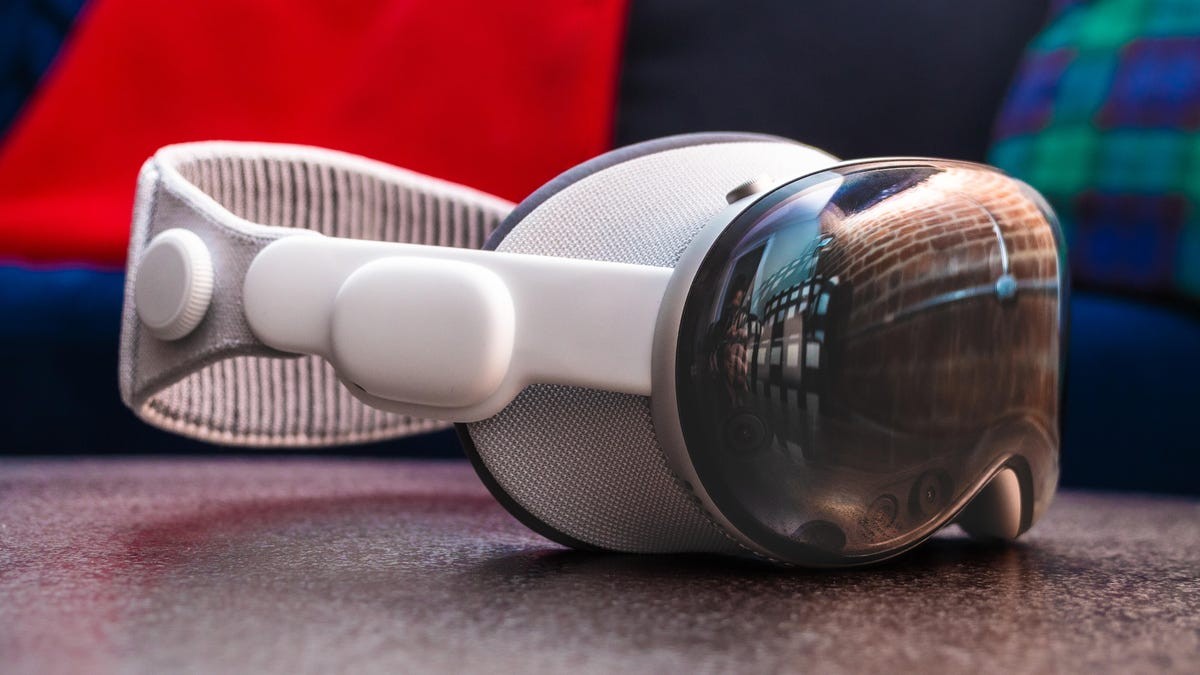
Pro-level 3D tools? They’re an afterthought here. No spatial Apple Pencil in sight. This half-assed vibe makes the Vision Pro feel dead, especially now. It’s two years old. The hardware has iterated. But the soul? Stuck.
Dead?
Hardly.
Mark Gurman says more are coming.
Smaller.
Lighter.
Wait a few years though.
The AI smart glasses? Even later. Late next year maybe.
So we’re in this awkward pause.
WWDC is next week.
Perfect time to fix this mess.
Sleeping Giants
I love the idea.
Floating screens on demand.
Spatial computing for the masses.
Apple gave us a demo, not the product.
Take the Personas avatars. Cool tech. Latent potential.
Most people think Vision Pro failed under Tim Cook. Fair. Who actually owns one?
Yet.
The tech inside is undisputed.
The M5 chip.
The eye-tracking.
The sensors that blend your world with the screen.
It’s the best hardware on earth for VR/AR.
The software just doesn’t match the hardware.
It fails to use its own sensors for pro work. It ignores the future of AI wearables. Apple will launch glasses, camera-AirPods, maybe a pendant. Why not let the Vision Pro be the lab for them now?
Movies won’t save it.
Sports won’t save a $3,500 headset.
3D scans can.
Gaussian splatting exists. Display those holographic stitches on VisionOS. Use AI to recognize the room and guide projects.
“AI intermediaries shouldn’t just listen. They should see.”
Privacy? Yes, I worry.
Invasion? Possible.
But this headset is the safest sandbox to test camera-aware multimodal AI before it hits everyone’s faces via smart pins.
Gaussian splatting isn’t just an app feature.
It should be a core OS capability.
Full holographic images from AI-stitched video.
Connect this to the iPhone Camera app. Make the headset part of a studio system, not an isolated toy.
The Walled Garden Leaks
Logitech had to build the Pencil for Vision Pro.
Apple didn’t bother.
Sony’s PS VR2 controllers work? Sure. Go ahead.
Typical Apple experimental strategy. Let Logitech play with fire while you watch. Happens with iPad keyboards too.
But the real sin is isolation.
Mac works.
AirPods work.
Everything else? Locked out.
iPhone, iPad, Watch.
AirPlay casting? Boring.
Why can’t my iPad extend its display?
Why can’t my iPhone become a secondary monitor?
MacBooks run macOS on ARM chips now. The MacBook Neo proved it.
There is no technical excuse.
Juggle the devices. Recognize them all. Make magic happen.
The Apple Watch?
Left out entirely.
It’s a wrist control panel with motion sensors.
Perfect input device for the headset.
Apple says no.
Why?
Pro Tools or Paperweight
The price isn’t the problem.
The size isn’t the problem.
The software is.
It’s called Vision Pro.
It isn’t a pro machine.
Still falls behind the Mac. Even the iPad.
Where are the video suites? The 3D sculpting apps? The music tools?
Filmmakers use them as monitors right now. On-set props.
They should be creating content.
Building simulations.
Meta’s Quest 3, with far weaker specs, lets creators build.
Vision Pro hesitates.
If Apple won’t make the apps (Creator Studio skipped optimizations, after all), make the bridge better.
Foveated rendering works. Stream high-res only where eyes look.
Let Mac apps flow into the headset.
Let iPad apps extend.
Let iPhone screens float.
Open the path.
Developers need a way in.
Otherwise, when I have work to do…
I take it off.
Silence is heavy in these glasses.