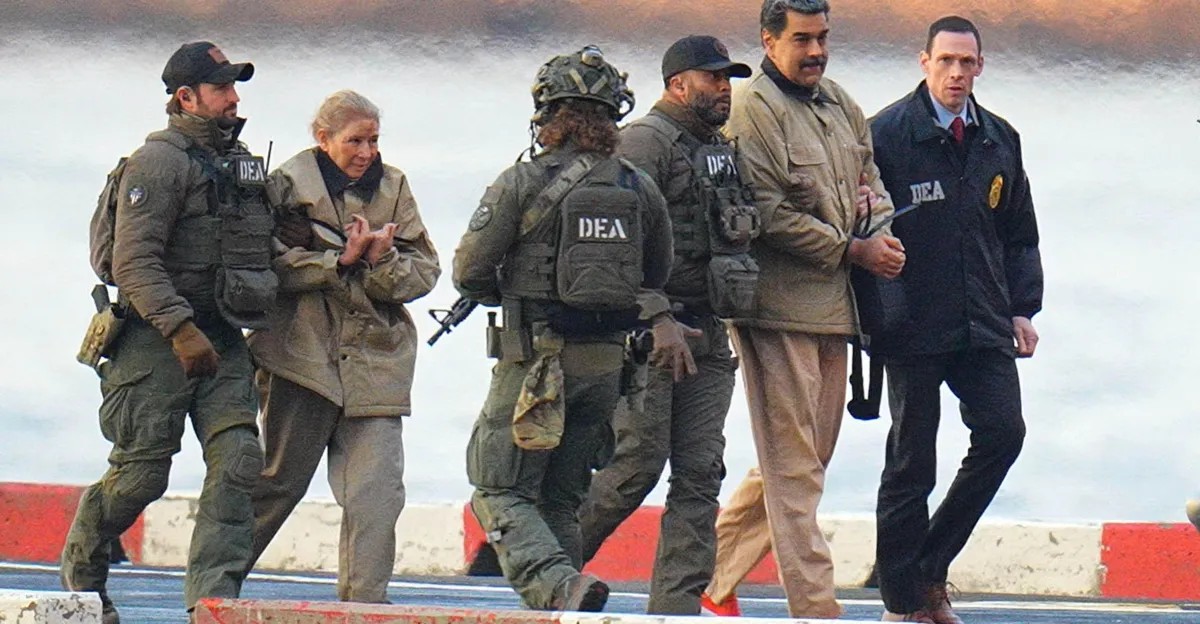
The timeline looks messy now. It started in January with a clean, bloodless snatch. By July, it’s five months of war.
Donald Trump declared a return to military action against Iran last week. He expected this to last four or five weeks. The math isn’t working. He’s comparing the Iranian leadership to a heavyweight boxer who keeps coming out of the shadows with a jab when you think you’ve got them beat. Frustration is the only emotion that fits the data.
Contrast this with the other side of the planet.
In Venezuela, the US effectively controls the government. Delcy Rodríguez, the new leader installed after Nicolás Maduro’s capture in January, asks White House approval before going on TV. Secretary of State Marco Rubio is operating as a viceroy from Washington, D.C., controlling oil revenues and the national budget.
One path was easy. The other is a disaster.
And the first path caused the second.
How the Venezuela Model Failed in Iran
Trump looked at the January raid and saw a blueprint.
Special Forces captured Maduro in hours. No US troops died. Critics predicted chaos. Opposition groups promised democracy. Instead, they got Delcy Rodríguez. A pliable vice president who lets Washington call the shots. Trump even joked about making Venezuela the 51st US state.
The New York Times described the operation as evidence of “unmatched prowess” by US forces. It emboldened the president. He saw a path to regime change that didn’t require a costly ground invasion.
He wanted to replicate this in Iran.
“I have to be involved in the appointment,” Trump said, referencing the selection of Rodríguez. He wanted to find another “Delcy” for Tehran.
It didn’t work.
When Ayatollah Ali Khamenei was killed in a joint US-Israel airstrike last June, Iran didn’t install a puppet. The Assembly of Experts chose Mojtaba Khamenei. The former leader’s son.
Trump called him a “lightweight” and “unacceptable.” He refused to play ball.
The new leadership insisted on keeping control of the state. Attacks on shipping and US allies continued. They are not taking orders from Marco Rubio. The assumption that you can swap a dictator for a collaborator on the fly was wrong. It was dangerously wrong.
Why Iran Is Not Venezuela
Surface-level similarities make the mistake obvious in hindsight. Both are authoritarian, oil-dependent states. Both oppose US hegemony. Both sponsor militant proxies. Both suffer under heavy sanctions. Both have large exile communities in America.
But the differences are structural and military.
1. Military Capability
Iran’s combined forces are roughly three times larger than Venezuela’s. They are better equipped. They possess missile and drone technology that has disrupted global shipping lanes for months. Iranian senior leaders came of age during the Iran-Iraq War of the 1980s. They have spent decades fighting proxy wars. Venezuela has not fought a modern interstate war. Maduro relied on Cuban security personnel for protection. Iran relies on a deep, entrenched military-industrial complex.
2. Geography as a Weapon
Iran sits on the Strait of Hormuz. The world’s most critical energy chokepoint. Blocking this strait drives up global oil prices instantly. Venezuela has the largest proven oil reserves on Earth, but its geography doesn’t allow it to strangle the global economy. It’s a resource problem, not a strategic one. Iran is a strategic threat.
3. Historical Leverage
Even at its worst, Venezuela maintained ties with US companies. Chevron operated there. Diplomatic channels never fully closed. Delcy Rodríguez was a known quantity, participating in talks with both the Biden and current Trump administrations.
Iran has no such off-ramp. The relationship is ideological and hostile by design.
4. Ideology vs. Crony Capitalism
Venezuela’s ruling class operates as crony capitalism with a socialist veneer. Chris Sabatini of Chatham House describes it as an “extreme form of crony capitalism” where officials profit from oil, gold, and other enterprises. When the pressure came, they chose to protect their fiefdoms. Some reports suggest Rodríguez had already cut deals with US officials before the raid. It was less a regime change and more a managed handover.
Iran is different. The regime is disciplined. Organized. Committed to the radical Islamist ideology of 1979. Leaders planned for succession. They prepared for decapitation strikes.
There were no “Iranian Delcys.” Attempts to cultivate Mahmoud Ahmadinejad or arm Kurdish rebels failed because there is no compliant figure within the system to take the throne.
The End of Hubris
Trump may not realize how bad this looks yet. But the data is clear.
The Venezuela operation was an exception. Not the rule.
In January, skeptics laughed at the idea that the US would “run” Venezuela. Now, they are. Discontent is growing. Rodríguez uses the recent earthquake as a pretext to delay democratic reforms. Opposition voices claim the US is responsible for the resulting failures. The grip is tightening, but it’s fragile.
The Iran war has been different from the start.
Trump claims he wants to get Iran “finished.” If the goal is regime change or submission, he has a long wait. The Pentagon is reportedly examining options for Cuba, which Sabatini notes is “more like Iran” politically—state-centric, vertical, disciplined. It won’t be easy to find a compliant leader there either.
Meanwhile, Trump is posting memes about annexing Canada. He’s talking about Greenland again.
The failure in Tehran hasn’t stopped the ambition. It should have.
The easy win in Caracas created a false confidence. A belief that military precision translates to political control. That you can hack a government like code.
Iran has proven that some systems simply don’t break under pressure. They break outward. And now, the blast radius is global.