Google is everywhere. It’s in your phone. It’s in your search results. It’s tracking your location. It even publishes blogs. This isn’t new. It’s just how the internet works now. Android runs most of the world’s mobile devices. Google got there by building its own tech and buying startups that looked promising. They saw the future coming. They moved fast.
But not every experiment works.
Google tries everything. They throw ideas at the wall. Sometimes it sticks. Mostly it doesn’t. This isn’t a bug. It’s a feature. The company operates in constant beta. You lose a product? The best parts usually survive. They get folded into something else. That’s the pattern. We are looking at the failures now. Not to mock them. To understand how online development actually works. Mistakes are just data. Properly recycled, they aren’t failures. They’re R&D.
Take Google Lively.
It started in 2006. The goal was simple. Web pages shouldn’t be static. They should be alive. You could drag objects around. Share screens in real time. It was like a video chat room built into a webpage. Early adopters loved it. Developers played with it. It felt like the next big thing.
Then it died.
Why? The tech was too heavy. It relied on plugins. Users hated installing software just to view a page. It crashed often. The social graph wasn’t there. Nobody had invited anyone to their Lively space. It was lonely. And expensive to maintain. Google killed it in 2008.
But look closer.
The features didn’t vanish. They migrated. Real-time collaboration? That’s now in Google Docs. The social layer? That moved to Orkut, then died, then inspired Hangouts, which died, then became part of Meet. The concept of “web pages as applications” is just what the modern web is.
“Lively wasn’t a failure. It was a prototype for the collaborative web we use every day.”
We think of these products as dead. They aren’t. They’re compost. They feed the soil.
Lively taught Google that users won’t install plugins for a browser feature. It taught them that social networks need existing friends, not a platform begging for a community. Those lessons are baked into how Google builds tools now.
This is the pattern.
Google builds. It breaks. It absorbs. It repeats.
Most people only see the winners. Gmail. Maps. YouTube. They don’t see the junkyard. They don’t see the prototypes. They don’t see Lively.
But if you look at what you use today, you’ll see the ghosts of Lively. Real-time cursors. Screen sharing. Drag-and-drop interfaces. All of it started as a “failure.”
This isn’t unique to Google. It’s how software works. You can’t iterate without breaking things. Google just breaks more things than anyone else.
Why does this matter to you?
Because you’re using the leftovers. Every time you collaborate on a document. Every time you share a screen. Every time you drag a file into a browser window. You’re using the remains of a project that died.
Lively was ahead of its time. And behind. It was

Google Lively. The name alone triggers a specific kind of digital amnesia. It was a virtual world that vanished after just six months in 2008. Nobody talked about it then. Nobody talks about it now. It is the textbook definition of a right idea executed with the wrong software.
While Second Life and its kin are currently sitting in the desert, surviving on nostalgia and stubborn users, looking back at Lively reveals something strange. It wasn’t just failed code. It was a surprisingly affectionate attempt to define what “online life” actually feels like.
A 3D Chat Room That Never Loaded
Users spun up avatars. They walked around a three-dimensional space. It looked like a hybrid between a chat room and early voxel-based building games—think Minecraft architecture without the survival mechanics. The goal was simple: talk to people. Build spaces. Hang out.
But the execution was painful. Server glitches. Lag. A user experience that felt more like wading through molasses than floating in a digital cloud. If you tried to use it, you likely gave up within minutes.
Yet, the core concept held water. Chat rooms have been the backbone of internet socialization since the BBS days. They were the digital equivalent of a coffee shop or a bar. You went there to meet strangers. You went there to find tribes that didn’t exist in your physical zip code. Trends shift. ChatRoulette had its moment of viral madness. Video chat is finally catching up to the promises made in the 1990s. But Lively tried to freeze that dynamic in a persistent 3D space.
The Shift From “Places” to “Feeds”
Here is where the timeline gets interesting. The problem with Lively wasn’t just the tech. It was the timing. It assumed the internet was still a place you visited.
In the early days, that made sense. The web was a frontier. You logged on to go somewhere else. Lively offered a digital nightclub. A virtual park. A way to escape the real world by building another one.
But the social web changed the rules. Facebook. Twitter. Reddit. These platforms didn’t ask you to invent a new geography. They asked you to import your real life. We stopped meeting strangers in open digital squares and started meeting them through shared connections. The internet stopped being a destination and became the infrastructure for the world we already live in.
Lively tried to sell you an escape. The next generation of social media sold you a mirror.
9: Google Answers
The legacy of that era isn’t just in the failed virtual worlds. It’s in the tools that replaced them. Google Answers was a precursor to a different kind of solution to the “who do I trust?” problem that plagued early online interactions.
When the web grew up, the need for random, anonymous 3D hangouts didn’t disappear—it just got buried under layers of verified profiles and algorithmic feeds. We don’t want to wander into a dark, unmoderated digital room anymore. We want curated spaces. We want to know who is next to us.
Lively was a dream that couldn’t survive the reality of server latency. But its failure highlighted a shift that’s still defining our digital lives today. We don’t
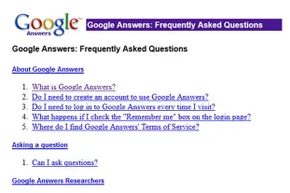
We stopped chasing the “answers” myth when Google became instant. It didn’t happen overnight. It was a slow realization that the universal tip line was dead.
Yahoo! Answers still exists. People use it. But not for facts. They use it for the weirdness. The entertainment value of strangers debating niche topics. If you actually need data, you don’t post to a public board. You go to a specialized site. You DM a friend. You trust your network over a random freelancer.
This shift wasn’t just behavioral. It was structural. We moved from a centralized model to a decentralized reality. The old model assumed one platform could know everything. Google proved it didn’t need to. It just needed to index everything else.
Why Paid Answer Services Failed
Several startups tried to monetize this gap. ChaCha. AskJeeves (later Ask.com). Google Answers (later canceled and replaced by the AdSense model for answers).
The premise was simple. Ask anything. Get paid by humans to answer it.
It sounded logical on paper. It sounded insane in practice.
Asking someone to Google something for you is bad netiquette. It’s also terrible business. You are paying for what the end-user can do themselves in three seconds. The value proposition collapsed under its own weight.
Google Answers used an auction model. Freelancers bid on questions. The lowest price or fastest response won. It turned knowledge into a commodity race to the bottom.
“Asking somebody to Google something for you is bad netiquette, certainly — but it’s also stupid business.”
The Transitional Window
It wasn’t always obvious. Between April 2002 and November 2006, the service had a purpose.
Search engines were slower. Algorithms were less sophisticated. The “zero-click” experience didn’t exist. Users needed intermediaries. They needed curation. They needed humans who knew where to look.
That window closed. Google’s index grew. Its ranking algorithms improved. The browser itself began to offer autocomplete, related searches, and instant definitions. The friction vanished.
Why pay a human when the machine gets it right 95% of the time? And why pay for the 5% when a quick refinement of your query fixes it?
What Comes Next?
The lesson wasn’t about answers. It was about access.
We don’t need people to find things for us. We need tools that help us find things ourselves. The shift from “answer services” to “search engines” marked the end of the intermediary era.
Now we look for other models. Curated newsletters. AI assistants that synthesize rather than search. Communities that filter noise rather than generate questions.
The universal answer is gone. Long live the specific query.
8: Google Print Ads and Google Radio Ads
This section marks a pivot. We’re leaving the “human answer” market. We’re entering the “ad-supported content” market.
Google didn’t just stop the answer service. It changed how content was monetized. Print ads. Radio ads. Digital extensions of physical media.
The infrastructure for this shift was already in place. AdSense. The ability to place targeted ads next to content. But the integration with traditional media types was new.
It wasn’t just about text links anymore. It

The push to monetize the web didn’t stop at screens. Google looked at the massive data hoard it had built and saw an untapped frontier: the physical world. The logic was simple. If you know what people buy online, you know what they want in real life. The company tried to export its precision targeting to print and radio, offering those dying industries a lifeline of hyper-specific audience data.
It was a bold move. Or at least, a confident one.
Google assumed its proprietary metrics could translate across mediums. They wanted to bring the same level of granular consumer insight to billboard buyers and radio DJs. But the offline advertising world isn’t just a slower version of the internet. It operates on different trust dynamics.
Executives in traditional media didn’t hand over their keys. They were skeptical. The idea of letting a tech giant dictate ad placement based on digital breadcrumbs felt risky. More importantly, measuring success was a nightmare. On the web, you can track a click. In print? You’re guessing.
The translation failed. The metrics that worked for banner ads didn’t work for newspaper inserts. The ROI was too opaque. So, Google retreated to its core competency. It kept its data. It kept its dominance. But the experiment with offline revenue streams fizzled out, proving that some things don’t scale across mediums.
While Google doubled down on its online monopoly, a different kind of social layer was emerging. One that wasn’t about advertising dollars, but about proximity.
7: Dodgeball
Before “location” became a buzzword for stalking your friends or targeting ads for coffee shops, there was Dodgeball. Launched in 2000 by Dennis Crowley and Nabeel Hyatt, it wasn’t an ad platform. It was a location-based social network.
The premise was rudimentary but revolutionary. You checked in at a venue. Your friends could see where you were. It was the precursor to Foursquare, which itself paved the way for every “nearby” feature in your apps today.
Why does this matter now? Because Dodgeball proved that people cared about their physical location in the digital sphere. It wasn’t just about buying things. It was about status. It was about saying, “I am here. Are you?”
Google eventually bought Dodgeball in 2005. It was part of a broader strategy to secure the “real world” data link. But instead of integrating it into ad sales immediately, they let it sit. They were building the infrastructure. They were gathering the geospatial data that would later power Google Maps and local search.
Dodgeball didn’t generate millions in revenue like Google’s core search business. But it captured something harder to quantify: habit. It taught users to share their location. It normalized the idea that your phone knows where you are, and that’s okay.
The shift from Dodgeball to Google’s broader local services highlights a subtle change in intent. Early location tech was social. Later, it became commercial. The data points didn’t change. The application did.
Crowley and Hyatt created a tool for connection. Google acquired the tool for context.
This distinction is often lost in hindsight. We see the current state of local search as inevitable. We don’t see the years of experimentation, the failed offline ad
The Dodgeball Paradox
Let’s skip Android. It’s too obvious. Look at Dodgeball instead.
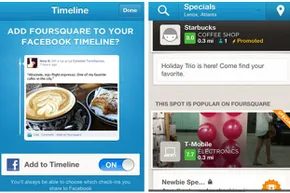
Google bought it in May 2005. They got the tech. They got cofounder Dennis Crowley. It seemed like a slam dunk. Location-based social networking before smartphones were even a household phrase. People were carrying bricks with tiny screens. The hardware lagged behind the vision.
Crowley left two years later. Frustrated. He walked out and built Foursquare.
Why did Google fail here? The timing was off. The idea was too far ahead of its time. But the concept didn’t die. It evolved.
From Gamification to Utility
Foursquare took off because of badges. The “mayor” titles. The points. It was a game. Users performed loyalty for digital status.
Google eventually launched Latitude. Facebook tried Places. Neither caught the same fire.
They missed the point.
Gamification fades. Utility remains.
Users stopped checking in for badges. They did it because it was faster. Easier than typing out a tweet. Or updating Facebook.
The motivation shifted. It wasn’t about the virtual reward. It was about the speed of connection.
The New Standard
Check-ins became mundane.
They became a habit. Not a hobby.
Look at Instagram. Location tags are baked into the photo upload flow. You snap. You tag. You post. No separate app. No separate effort.
This is the real-world parallel playing out.
The check-in didn’t replace reality. It augmented it.
We map our lives onto the digital grid. Automatically. Invisibly.
Dodgeball tried to build a platform. Foursquare built a game. The market built a feature.
That’s how these things end. Not with a bang. But with a click.
6: Jaiku
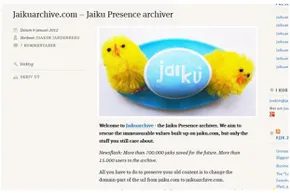
Twitter didn’t just win the short-post war. It obliterated the competition. By late 2008, the writing was on the wall. Google had bought Jaiku back in October 2007. The Finnish startup named its service after the poetic form because the updates were meant to be brief. Almost like haiku. But users didn’t care about clever naming conventions. They cared about who else was talking. And everyone was talking on Twitter.
The split between Google and Jaiku wasn’t clean. Rumors swirled about internal friction. It didn’t matter. The platform went open-source in 2009. A strange move for a tech giant to release its failing project for free. But by then, Jaiku was already a ghost. Google officially announced the shutdown in 2011. The lights went out on January 15, 2012.
Think about what might have happened next. MySpace became a digital archive for unknown bands. Its music tools outlasted its social features. Jaiku had that same potential. It could have evolved into something niche. Something useful. Instead, it just vanished. We’ll never know what it could have been.
Why Google Notebook Disappeared So Quietly
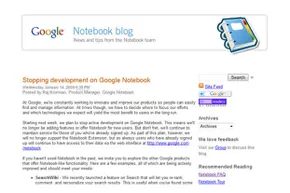
Then there was Google Notebook. It sat there. Unobtrusive. Unnoticed by most people who didn’t need to clip quotes from articles. It was a simple tool. You highlighted text. You saved it. You organized your thoughts. It didn’t track your location. It didn’t push ads. It just worked.
But it didn’t work well enough to survive. Google killed Notebook in 2012. The exact date is fuzzy. The reasons are clearer. The rise of browser extensions changed everything. Tools like Evernote and Instapaper began eating this market. They were faster. They integrated better with other apps. Notebook felt clunky. It felt like a feature, not a product.
The Rise of Alternatives
Why did users leave Notebook? The answer is simple. Convenience.
- Ease of access: Extensions lived in the toolbar. Notebook required a login and a separate interface.
- Cross-platform sync: Other tools synced across devices instantly. Notebook lagged.
- Feature creep: Competitors added image clipping, PDF annotation, and mobile apps. Notebook stayed static.
Google tried to keep up. But Notebook was never given the resources to compete. It was a side project. When the market shifted, it got left behind.
What We Lost
Clipping information used to be a deliberate act. You stopped. You selected. You saved. It felt intentional. Now, we just highlight and hope our cloud sync works. The friction is gone. But so is the curation.
Notebook was a relic of a simpler time. A time when Google built tools for power users. Not just for the masses. It’s gone now. Like Jaiku. Like so many other Google experiments.
The Pattern of Discontinuation
Look at the timeline.
- 2007: Jaiku acquisition.
- 2009: Jaiku goes open-source. Twitter dominates.
- 2011: Notebook begins its slow decline.
4
Google Docs eventually became the collaborative document engine that Wave was supposed to be, but that success doesn’t explain why Google still hasn’t built a personal information manager capable of challenging Evernote. The logic seems sound. If you can clip a snippet from the web and have it retain its citation while you work, that is a killer feature. Especially if it lives inside the browser.
Yet Google has tried to build this specific tool over and over again. They keep failing to capture the productivity crowd.
Why? Usually because the learning curve is too steep or the interface is too heavy. The market for storing facts, quotes, and minor tasks remains dominated by apps with minimal extensions and simple feature sets. When all your data is in the cloud anyway, the ability to sync from home to office to phone is no longer a differentiator. It is just a baseline expectation.
The Shared Stuff Misfire
Then there was Shared Stuff. The name alone suggests a lack of serious branding strategy. It attempted to bridge the gap between Google Docs and Google Notebook by making clips public. It was buggy. It never truly integrated into the Google ecosystem.
The result was effectively a worse version of social bookmarking.
Platforms like Delicious handled this better by leaning into the “social” aspect of bookmarking. Whether it’s Delicious, Reddit, or BuzzFeed, the value isn’t just in the link. It is in the commentary. What you and your friends say about the content matters more than the content itself.
Google eventually absorbed the relevant fragments of Notebook and Shared Stuff directly into Google Reader. The standalone ambitions were abandoned.
4: Google Buzz
This brings us to the next failed experiment in social integration.

The Silent Death of Google Buzz
It didn’t launch with fanfare. It didn’t even ask for permission.
In February 2010, Google shoved Google Buzz into Gmail like a surprise guest at a quiet dinner party. It appeared as a new tab in the Inbox. You could opt out, sure, but most people didn’t see the button before the social feed had already started scrolling.
What was behind that curtain?
Essentially, it was Google Reader wearing a mask.
Remember Google Reader? It was the last great RSS client. A clean, text-focused interface for following blogs and news. It worked. People loved it. Then the world moved on.
The RSS standard began to crumble. Users migrated to tablet-based curators like Google Currents (briefly) and eventually to app-based aggregators. The transition was already happening before Buzz arrived.
So Google took a dying format. They wrapped it in social friction. They added a folder that just grew.
Every morning.
The “Unread” count ticked up. Not because you were neglecting your duties, but because the feed never stopped. It created a low-level, subconscious stress. A digital anxiety loop.
“Perhaps if Google Buzz had incorporated some sort of reward for getting through those — formerly enjoyable! — updates from our favorite sites, it would have done better.”
It didn’t offer rewards. It offered noise.
By late 2011, Google killed it.
The cycle of reading had shifted again. We stopped reading blogs in email clients. We started reading magazines on devices that looked like magazines. iPad. Kindle Fire. Android tablets.
The form factor dictated the content. And Buzz? It was just another folder that nobody opened.
3: Wikipedia Alternatives

The Wikipedia Experiment That Never Was
The past is a bit hazy, but you probably remember when “wiki” felt like its own dominant cultural force, right before Wikipedia took over the world. Today, television fandoms and niche information hubs still run wikis. They are filled with user-edited, user-confirmed facts about the things they love. That’s the baseline. What makes Wikipedia special isn’t the concept. It’s the sheer size and devotion of its community.
Despite what your high school English teacher insists, the fact that “anybody” can edit a page doesn’t make the information invalid. All accepted knowledge is written by committee. That’s just how it works.
And that brings us to Google.
Google didn’t just watch from the sidelines. From the summer of 2008 onwards, they rolled out a sequence of Wikipedia add-ons and alternatives. They tried to build Wikipedia alternatives that could compete with the giant. SearchWiki. Knol. SideWiki. The pattern was clear: couldn’t beat ’em, couldn’t join ’em, finally gave up.
Knol was supposed to be a collection of user-written articles. It looked like a direct challenge. SearchWiki let users sort and annotate search results. It was an attempt to inject community into the core product. SideWiki was a browser extension that let you annotate web pages directly. It was a sidebar for commentary.
Any attempt at a Wikipedia alternative was always going to struggle. Even one administered by user-beloved Google couldn’t measure up in sheer crowdsourcing power. Network effects are brutal. Knol shut down in May of 2012.
Why did it fail?
Perhaps if there had been any outstanding problems in the Wikipedia interface, Knol would have had a shot. But Wikipedia is solid. It offers enough usefulness to every level of user. You have the novice looking up “what is a bee.” You have the expert correcting a typo in the article about Apis mellifera. Both people are welcome to search and provide information. Often at the same time. It’s pretty amazing if you think about it. Everyone is welcome.
SearchWiki had its own issues. Users seemed reluctant to mess with Google’s organic search results. It felt intrusive. It was replaced with a star system in late 2010. Still didn’t stick.
SideWiki suffered from a different fate. Users never really took to using a sidebar to comment on web pages. The friction was too high. Google pulled the plug in September 2011.
The lesson wasn’t complex. You don’t beat a community by building a better interface. You beat it by having the community. Google learned that. Eventually.
2: Google Video
Google Video tried to squash YouTube. They had a sleek interface. They had clever algorithms. But they had a fatal flaw: they didn’t need to exist.
Think of early YouTube as the chaotic, crowdsourced energy of Wikipedia. User reputation surfaced the best content. Google Video didn’t get that. Instead, it took a tightly curated path. It became more like Vimeo. A storehouse, not a street.
Eventually, Google bought YouTube for $1.65 billion in stock. So the conflict ended with a handshake.
But the story is stranger than a simple acquisition.
The Transcript Origin
In January 2005, Google Video didn’t launch as a video host. It debuted as a way to turn TV broadcasts into searchable transcripts. It was about data, not viewing.
By summer 2005, they added uploads. Sharing came next. Within a year, they dropped the transcript idea entirely.
Google hasn’t abandoned transcripts completely. By 2012, they were available on some YouTube videos.
The Wrong Tech Stack
Google Video had a slim chance at survival. It could have won on user experience. Facebook did it once with a clean interface.
Instead, Google Video introduced a proprietary file type. And a custom player.
Suddenly, you had to do more to create content. More to enjoy it.
File extensions and media players come from somewhere. That’s true. But it’s a bad strategy when you’re fighting YouTube. YouTube was already the standard. It was already usable. Portability between devices was becoming the killer metric. Google Video ignored it.
The Rental Phase and the Static Archive
After acquiring YouTube, Google tried to rebrand the service. It failed.
Then Google Video shifted again. It became a video rental service.
This put it directly against Netflix. The guy who already won.
It didn’t work. So Google Video reverted to a YouTube analogue. This is good news for people who already host content there.
Uploading is now disabled. The site is a static collection of videos. It stands as a testament to a brief time. A billion-dollar attempt to fill a community need.
It will likely fold back into YouTube eventually. The archive remains for now.
1: Google Wave
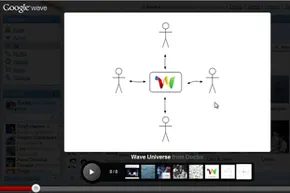
Why Google Wave Failed: A Case Study in Feature Creep
Wave wasn’t just a failure. It was Google’s biggest, most spectacular flop.
It bundled unnecessary features in ways that made no sense. It tried to be everything to everyone. The goal was content sharing on a massive scale. Think of it as Google+’s ugly, earlier cousin. Google+ is still trying to take over social media. Wave is long dead. The time to mourn it passed years ago.
Want to send an email? Gmail exists. Use that. But Wave offered a different path. You could send emails through a counterintuitive process. The recipients were often a confusing mix of people.
You could turn an email into a song. Or a video. The conversation itself could be made of those things. You could juggle users entering and leaving the thread. You’d never know who was actually talking. Or if they had followed the conversation from the start.
There were always-on sidebars. These created a constant paranoia. It felt like everyone was talking about you behind your back.
Combine these elements with chat room lag. Add social awkwardness. Mix in online document collaboration issues. Toss in flame wars. Add the discomfort of meeting work friends and regular friends in one space. Wave combined all the worst parts into a single app. No one knew how to use it.
It wasn’t actually that bad.
The anticipation overshadows value. This happens with Apple products. It happens with presidents. We pay for mediocre projects and swear they’re the best. We feel defeated by free products and call them the worst things ever.
Wave fits this pattern.
It launched via an invite system in 2009. Google Voice used this model too. Voice spread through culture. The early adopters turned backflips on release day. They talked about it for two weeks before and after launch.
This is a risky strategy. Wave had no broad-spectrum use. It took more than two weeks to learn. Even hard-core Google fans struggled with the learning curve.
Even seasoned programmers struggle to explain why Wave was so unloved to laypeople.
Part of it is code complexity. The precise reasons it failed to integrate with other Google suites are technical. They don’t matter to most users.
Part of it is the anticipation-backlash effect. High expectations lead to harsher judgments.
The “right place, wrong time” factor likely played a role.
The features people actually liked in Wave haven’t vanished. They will likely appear in future projects. Or in acquisitions. The broken pieces of abandoned products are Google’s Island of Misfit Toys. Those pieces get picked up. They get dusted off. They get integrated into new configurations.