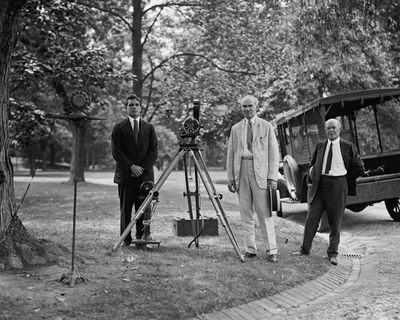
The 1920s marked the transition from silent films to talkies, but the technology behind that shift wasn’t as simple as adding a microphone to a camera. Phonofilm was the system that made synchronized sound possible for motion pictures. It worked by photographically recording the soundtrack directly onto the film itself.
The basic mechanism of optical sound recording
Here is the core problem Phonofilm solved: how do you keep audio in sync with video when they are physically separate things? The answer was to make them one.
A beam of light, modulated by sound waves, was used to expose the film stock. Think of it like a variable light valve. As the sound waves hit a microphone or transducer, they caused a change in the intensity of that light beam. That light then burned a specific pattern onto the film strip adjacent to the picture frames.
This wasn’t magnetic tape. It wasn’t digital audio. It was a physical image of sound.
How projection reproduced the audio
Replaying that sound required a specific setup at the projector. You couldn’t just look at the film; you had to read it with light again.
During projection, a steady beam of light was directed through the sound track on the film. As the film moved, the varying opacity of the recorded sound track modulated that light beam. A photocell then caught the light on the other side.
The photocell converted the fluctuating light intensity into an electrical signal. That signal was weak, so it was electronically amplified. The amplified signal then drove the speakers, producing the sound you heard while watching the picture.
“The sound was reproduced during projection by directing a beam of light through the sound track onto a photocell, the response of which was electronically amplified.”
Why this mattered for everyday cinema
For audiences in the 1920s, this meant the end of the era where sound effects and music came from separate, often out-of-sync sources in the theater. The synchronization was inherent to the medium. Because the sound track was physically attached to the film, the audio could not drift out of sync with the lip movements on screen in the way it often did with early independent sound systems.
This technology laid the groundwork for the sound-on-film standard that persisted in cinema for decades. It wasn’t the only method; magnetic sound and other optical systems existed, but Phonofilm was a pivotal early system that proved optical synchronization was practical and reliable for mass distribution.
The system relied on precise mechanics. If the film speed varied even slightly, the pitch of the sound would shift. That’s why projectors had to maintain a strict, consistent rotation speed. It was a fragile system, but it worked well enough to change how movies were made and consumed forever.